Aquaponics‑Safe Nutrients: Iron Chelate, Potassium, and Calcium Dosing That Won’t Harm Fish or Biofilters
The Common Mistakes That Quietly Wreck Aquaponics Systems
“If it’s safe for an aquarium, it must be safe for aquaponics.” That assumption is how a lot of school and community systems end up with yellow plants, stressed fish, and biofilters that never quite stabilize.
Most aquarium guidance is built around keeping fish alive, not driving continuous plant production in a recirculating food system. Once you start adding iron chelates, potassium buffers, and calcium supplements, those differences matter.
This guide strips it down to what actually works in real systems: how to dose iron (EDDHA/DTPA vs EDTA), potassium bicarbonate/sulfate, and calcium so you can fix chlorosis and weak growth without crashing fish or nitrification.
Mistake 1: Using the Wrong Iron Chelate (or Guessing the Dose)
Iron deficiency is one of the most common nutrient problems in aquaponics, especially in new systems or hard water regions. The usual symptom: new leaves go pale yellow while veins stay green, even though your ammonia and nitrate numbers look decent.
Many growers reach for the cheapest “aquarium-safe” iron or a generic EDTA iron chelate and dump in a capful. That works at low pH hydroponic ranges, but aquaponic systems typically run 6.8–7.4 to keep fish and biofilters happy. At that pH, EDTA-bound iron becomes much less available to plants and can precipitate out of solution as reviewed here.
Result: you think you “added iron,” but plants still see a deficiency while chelators and dissolved metals accumulate around fish and bacteria.
Mistake 2: Treating Potassium and pH as Separate Problems
Another classic mistake is chasing pH with products designed for aquariums (“pH up” / “pH down”) while ignoring potassium levels. In aquaponics, potassium is usually one of the first macronutrients to run short, especially in leafy systems (basil, lettuce, chard) and fruiting crops (tomatoes, peppers).
If you fix pH with sodium-based buffers or generic carbonates, you get stable pH but potassium-starved plants. Leaves curl, stems weaken, and fruiting crops abort flowers or set weak fruit, even though your test kit says “water is perfect.”
Mistake 3: Spiking Calcium in One Shot
Calcium is another slow-burn issue. Deficiencies show up as blossom-end rot on tomatoes and peppers, tip burn on lettuce, and brittle growth in herbs. The typical reaction: add a big dose of calcium chloride or calcium nitrate all at once.
That single hit can bump hardness and osmotic pressure fast enough to stress fish and knock back nitrifying bacteria. In systems without strong aeration, any rapid chemistry change is extra risky, because dissolved oxygen (DO) can already be borderline. As this explainer on air stones notes, good aeration is key to keeping both fish and bacteria stable when you alter water chemistry.
Mistake 4: Importing Full Hydroponic Micronutrient Routines
Hydroponic recipes (including Kratky and DWC formulas) are tuned for plants only. They assume you can push EC high and run iron, manganese, zinc, and copper at levels that would be outright dangerous to fish over time.
When growers pour standard hydroponic “micro” bottles into aquaponics at the label rate, the system often looks fine for a few weeks. Then fish appetite dips, biofilters lose efficiency, or you see unexplained mortality. These are slow, chronic toxicity issues, not obvious “overdose” events.

Why These Mistakes Happen (And What the Science Actually Says)
Iron Chelates: EDTA vs DTPA vs EDDHA in Aquaponics
Iron solubility is heavily pH dependent. In aquaponics, your pH sweet spot for fish and bacteria (about 6.8–7.2) is not ideal for most simple iron salts, which rapidly turn into rust-coloured sludge and become unavailable to plants.
- EDTA iron is stable and plant-available mainly below about pH 6.5. Above that, it rapidly loses effectiveness, as discussed in this review on iron in aquaponics.
- DTPA iron holds on better into the high-6s and low-7s, making it a good choice for mildly alkaline systems.
- EDDHA iron is stable and available up to roughly pH 9 and is the most forgiving option if your system drifts alkaline.
The catch: strong chelators (particularly EDDHA) can also mobilize other metals. In a pure hydroponic environment that is controlled and periodically dumped, that is manageable. In closed-loop aquaponics, anything you add can accumulate and interact with fish and biofilter media over months and years.
The peer-reviewed review above notes that effective iron concentrations in aquaponics are generally in the 1–2 mg/L range for plants, but that does not mean “the more the better.” It means you should target that range over time, with controlled additions and monitoring, not single big doses.
Potassium Bicarbonate: Buffer and Nutrient in One
In recirculating systems, nitrification slowly eats alkalinity and drags pH downward. If you do nothing, you can slide under pH 6.5, where nitrifying bacteria slow down and ammonia starts shifting to the more toxic NH3 form.
Potassium bicarbonate is a smart tool here because:
- It restores alkalinity and nudges pH upward.
- It supplies potassium, which is often low in fish-driven systems.
- It avoids sodium build-up, which is common with some aquarium buffers and can stress plants at higher levels.
The trade-off: it must be dosed slowly. Jumping pH by more than about 0.2–0.3 units per day is stressful for fish and biofilters, regardless of how “safe” the buffer is on paper.
Calcium Sources and Biofilter Sensitivity
Calcium plays three overlapping roles in aquaponics:
- Plant structure and membrane function.
- Fish bone and fin development.
- Water hardness and buffering.
When you add calcium, you are not just feeding plants; you are also altering carbonate hardness (KH) and general hardness (GH). Sudden shifts can alter how ammonia, nitrite, and nitrate behave in water, which in turn affects nitrifying bacteria.
Slow-release carbonate sources (like calcium carbonate) tend to buffer pH gently and give bacteria time to adapt. Faster-acting salts (like calcium chloride) hit the system immediately. That is fine for small corrections in well-aerated systems but risky in marginal ones with low DO or limited biofilter surface.
Why “Fish-Safe” Aquarium Fertilizers Are Not Automatically Aquaponics-Safe
A lot of aquarium plant fertilizers are marketed as “fish safe” because they do not kill ornamental fish in typical aquarium setups over reasonable time frames. That is not the same thing as “safe to dose into a food production system for months or years without affecting fish growth, reproduction, or human food safety.”
As noted in this overview of fish-safe fertilizers, many aquarium products work by keeping nutrients very soluble and available to plants, often with chelating agents and trace metals that are fine in tiny tanks with frequent water changes. In aquaponics, we do the opposite: minimal water changes, long residence times, and constant recycling through fish, plants, and bacteria.
So even if a bottle says “safe for shrimp and fish,” you still need to look hard at:
- Total copper, zinc, and boron levels.
- How often they expect you to redose.
- Whether the product is designed for constant water replacement, which you are not doing.
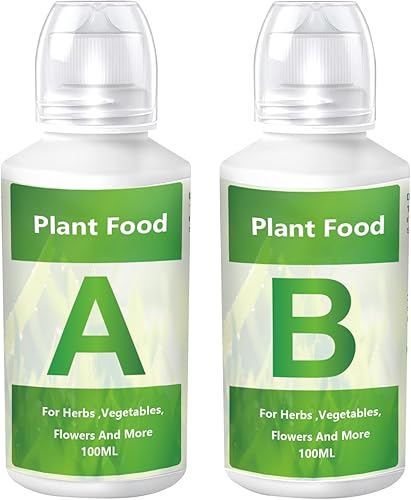
How to Fix Iron, Potassium, and Calcium Safely in Aquaponics
Step 1: Confirm You Actually Have a Deficiency
Before you dose anything, confirm that the problem is nutrient-related and not pH, DO, or root health.
- Iron deficiency: new growth turns pale with green veins (interveinal chlorosis), older leaves stay comparatively greener.
- Potassium deficiency: older leaves develop yellow or brown edges and tips; you may see weak stems and poor flowering.
- Calcium deficiency: distorted new leaves, tip burn on lettuce, or blossom-end rot on fruiting crops (dark, sunken spots at the blossom end).
Also check:
- System pH (target about 6.8–7.2 for mixed fish and plant health).
- Ammonia, nitrite, and nitrate (no ammonia or nitrite above trace; nitrates present).
- Temperature and DO (good aeration is non-negotiable when dosing nutrients, as highlighted in this DO guide).
Step 2: Iron Dosing Protocol (EDDHA/DTPA vs EDTA)
For most aquaponic systems (media beds, rafts, DWC grow-beds attached to fish tanks):
- Use DTPA iron chelate if your pH is consistently under about 7.2.
- Use EDDHA iron chelate if your pH tends to sit 7.2–8.0 or your source water is alkaline.
A practical, fish-conscious protocol:
- Target about 1–2 mg/L of elemental iron in the system water, which aligns with the range discussed in the aquaponic iron review.
- Start by adding enough chelate to achieve roughly 0.5–1 mg/L based on total system volume.
- Wait 5–7 days and watch new growth.
- If chlorosis persists, repeat a half-dose weekly until symptoms correct.
Important safety notes:
- Add iron solution into a high-flow area (sump or return line) so it distributes quickly.
- Do not redose more than once per week unless you are running advanced water testing.
- If fish show stress (gasping, flashing, rapid gill movement) after dosing, perform a partial water change and boost aeration immediately.
Step 3: Potassium Bicarbonate Dosing Protocol
For systems where pH is dropping below 6.6 and potassium deficiency is visible:
- Use potassium bicarbonate as your primary pH-up agent.
- A conservative starting point is about 0.5–1 g per 100 L of system water, added to a bucket of system water first, then slowly poured into a high-flow zone.
- Re-test pH after 2–3 hours. Aim for no more than a 0.2–0.3 pH unit increase in a single day.
- Repeat small doses over several days until your pH is back in the 6.8–7.2 band.
This approach does three things at once:
- Softly restores alkalinity for nitrifying bacteria.
- Feeds potassium into the system in plant-usable form.
- Avoids sodium accumulation that you would see with many aquarium pH products.
For ongoing maintenance, many growers find a cadence where they add a small potassium bicarbonate dose once or twice per week, adjusted seasonally as fish feeding rates and plant demand change.
Step 4: Calcium Supplementation Protocol
Calcium strategy depends on where your pH naturally runs.
- If pH tends to fall (common in mature, heavily stocked systems):
- Use calcium carbonate (crushed coral, shell grit, or agricultural lime) in a mesh bag placed in your sump or high-flow zone.
- Let it dissolve slowly; replace or top up when pH starts trending downward again.
- If pH is already in range but calcium deficiency signs appear:
- Use calcium chloride or calcium sulfate (gypsum) in carefully measured small doses.
- Start with about 0.5 g per 100 L, pre-dissolved, added slowly to high-flow zones.
- Wait several days before considering another dose; watch both fish behaviour and new plant growth.
Steady, small additions are far safer than one-off corrections. In systems with sensitive fish species or marginal aeration, always prioritize extra aeration when dosing minerals.
Step 5: Micronutrient Strategy That Does Not Punish Fish
For mixed plant loads (greens plus some fruiting crops), you typically need small amounts of manganese, zinc, boron, and others on top of iron.
Safer options:
- Use micronutrient blends specifically labelled for aquaponics, with conservative trace metal levels.
- If using hydroponic “micro” products, start at 10–20% of label hydroponic dose and only redose after observing plant response for 7–10 days.
- Avoid any product that leans heavily on copper; fish are particularly sensitive to copper even in the 0.02–0.05 mg/L range over time.
Whichever product you choose, keep EC modest. Many aquaponics systems run well around 0.8–1.5 mS/cm, versus higher ECs in pure hydro. That lower EC helps protect fish while still supporting strong plant growth when iron, potassium, and calcium are dialed in.

What to Watch Long-Term: Stability, Not Quick Fixes
Benchmark Ranges for a Stable Aquaponics Nutrient Profile
For most mixed-crop freshwater aquaponics systems (with rafts, DWC beds, or media beds):
- pH: 6.8–7.2 (tolerable 6.5–7.4)
- EC: about 0.8–1.5 mS/cm
- Iron: 1–2 mg/L as chelated iron
- Calcium: roughly 20–100 mg/L (varies by crop)
- Potassium: similar magnitude to calcium; visible deficiency should not appear on older leaves
- Ammonia: <0.1 mg/L (ideally undetectable)
- Nitrite: undetectable
- Nitrate: present but not extreme (for example, 20–150 mg/L depending on plant load)
Routine Practices That Protect Fish and Biofilters
- Log every addition: date, product, dose, and reason.
- Change one variable at a time: do not adjust pH, add iron, and change feed rate on the same day.
- Use aeration aggressively: air stones or diffusers are cheap insurance for DO when you dose buffers or chelates, echoing the role outlined in this article on bubble stones.
- Match plant demand to fish output: overplanted systems will show deficiencies faster and push you to “dose your way out” of what is really a stocking or feeding imbalance.
Adapting Hydroponic Knowledge to Aquaponics Safely
If you already run DWC or Kratky hydro systems, you are ahead of the curve on plant nutrition. The difference in aquaponics is that you do not have full control of the nutrient recipe and you do not get to reset with a reservoir dump.
So instead of chasing a textbook hydroponic profile, focus on:
- Using iron chelates that match your pH (DTPA or EDDHA, not basic EDTA).
- Letting potassium bicarbonate handle both pH and K, in measured steps.
- Building calcium and alkalinity slowly with carbonate-based sources where possible.
- Keeping micronutrients lean and conservative, with a bias toward aquaponics-formulated products.
Do that consistently, and most of the “mystery” plant issues in aquaponics disappear without ever putting fish or biofilters at risk.
As an Amazon Associate, I earn from qualifying purchases.