Backyard Tower Farming in the Tropics: How a Jamaican Pilot Shows Small Growers to Design Climate‑Resilient Vertical Hydroponic Systems
“Vertical farming only works in air-conditioned warehouses.” In hot, humid backyards from Kingston to Key West, that idea is quietly being proven wrong.
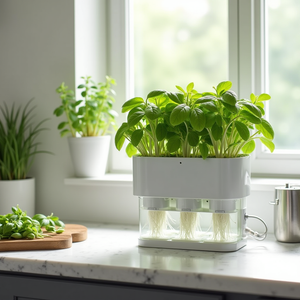
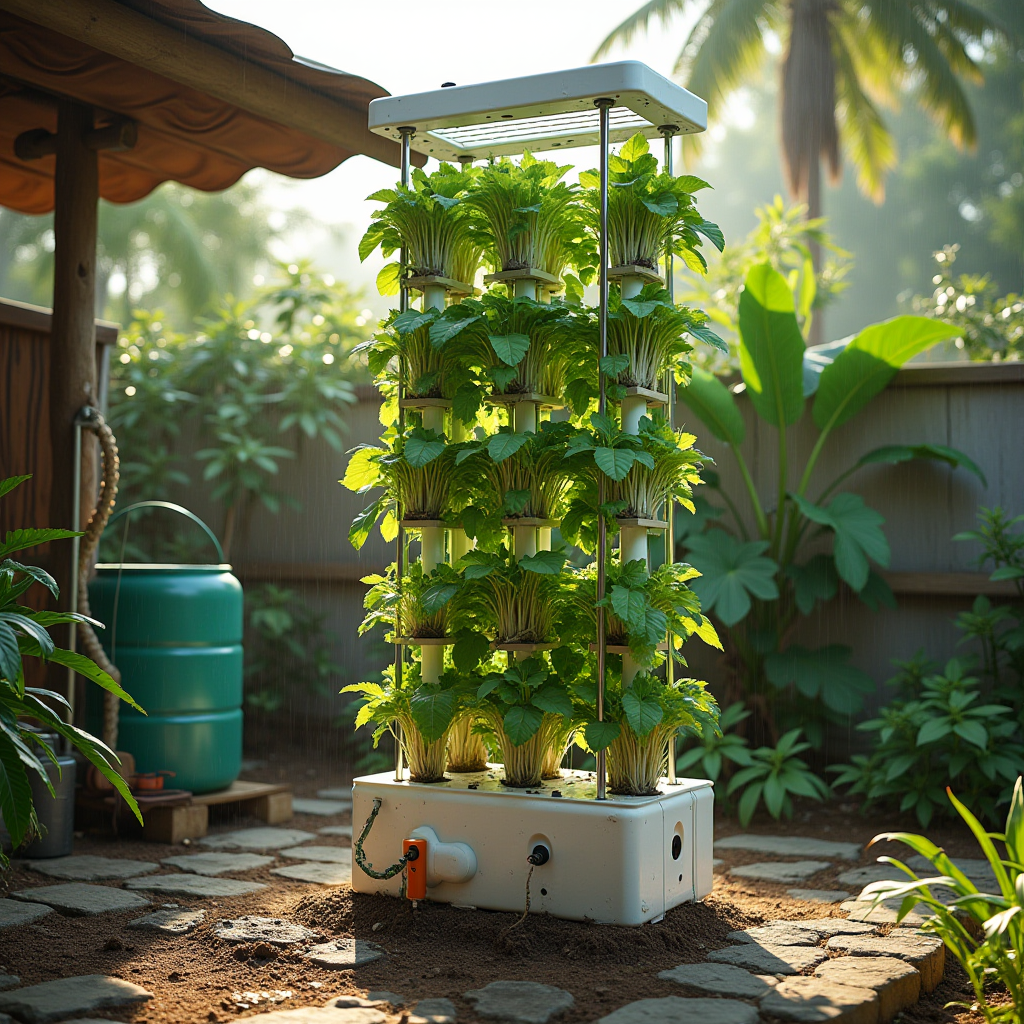
A small pilot in Jamaica, profiled in this Grozine feature, shows how a handful of vertical hydro towers in a tight suburban yard can push out steady greens, herbs, and some fruiting crops right through tropical heat, intense sun, and heavy rain.
This article breaks that real-world experience down into a practical blueprint: how to choose tower types, manage heat and storms, keep your nutrient solution stable, and design for unreliable water and power across the Caribbean, Florida, the Gulf Coast, Pacific Islands, and other tropical or subtropical zones.
1. Common Mistakes With Backyard Tower Farming In The Tropics
Most small outdoor tower projects in hot, humid climates fail for the same reasons. The Jamaica pilot succeeded because it deliberately designed around them.
1.1 Ignoring Nutrient Solution Temperature
Many growers focus on tower hardware and forget the most important part of the system: the reservoir. In the tropics, small, dark, exposed tanks can hit 30–35 °C by early afternoon. That is root-rot territory.
Common symptoms:
- Plants look fine in the morning but droop by midday.
- Roots go from white to tan, then brown and slimy.
- EC and pH readings swing around as microbes explode in the warm solution.
In the Jamaican yard system, solution cooling and shading was treated as critical “infrastructure,” not an afterthought, which is exactly how small growers in similar climates should treat it.

1.2 Using The Wrong Tower Type For The Climate
Not all vertical systems behave the same way in a hot backyard.
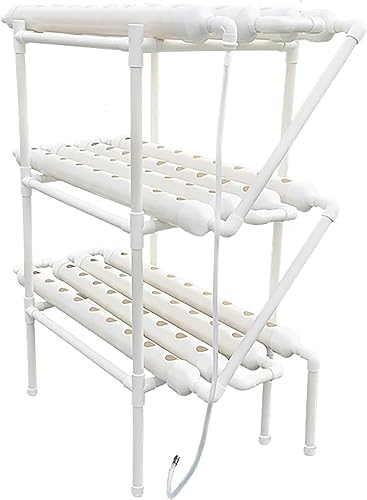
- Pure NFT towers (a thin film of nutrient trickling through tall channels) are prone to overheating and drying out in power cuts. Roots can desiccate in minutes if flow stops in 32 °C air with wind.
- Fine-mist aeroponic towers grow beautifully in controlled environments, but tiny nozzles clog with tropical biofilm and limescale. In open air, fine mist also evaporates fast.
- Media-filled towers hold moisture and buffer temperature but get heavy and can be battered by wind unless the frame is solid.
The Jamaican pilot leaned into robust, low-clog, recirculating towers with decent water volume per plant site and a shaded, centralized reservoir. That bias toward “simple and forgiving over flashy” is the right move outdoors in the tropics.
1.3 Underestimating Rain, Wind, And Salt Air
Tropical storms do not care how neat your plumbing looks on day one.
Weak points that often fail:
- Towers only resting on patio blocks, not properly anchored.
- Return lines set too high, so heavy rain plus backflow floods the grow area.
- Unprotected power strips and timers sitting where they can be splashed.
Coastal growers around the Caribbean and Gulf also face salt-laden wind that corrodes cheap metal fittings. Without stainless, PVC, or UV-stable plastics, systems can degrade in a single wet season.

1.4 Running Indoor Nutrient Schedules Outdoors
Most dosing charts are written for climate-controlled rooms. Outdoors in the tropics, heat and wind change water use and nutrient uptake completely.
If you copy an indoor schedule directly:
- Your EC can creep too high as plants drink lots of water but take up fewer salts under heat stress.
- pH may drift faster, with strong daily swings.
- Leaf tips burn even though your chart says the EC is “in range.”
In the Jamaican tower pilot, nutrient strength was run deliberately on the lower side, with more frequent top-ups and monitoring. That pattern is key for climate-resilient towers.
2. Why These Mistakes Happen In Tropical Backyards
2.1 Indoor Mindset In An Outdoor Climate
Most online content showcases vertical farms in cooled warehouses, AI-optimized racks, and sleek, sealed systems. It is easy to assume those designs will scale down to a Caribbean balcony or small yard. They usually do not.
In a backyard, you are exposed to:
- Rapidly changing sun angles and shadows through the day.
- Sudden squalls and sideways rain.
- Microclimates against walls, fences, and paved surfaces that hold heat well into the night.
The Jamaican pilot system accepted that reality. It used shade, orientation, and heavy, stable reservoirs to work with the climate instead of trying to fight it.
2.2 Underestimating Heat In The Root Zone
Growers obsess over air temperature while roots cook in a dark plastic barrel sitting in full sun. In hydro, root zone temperature matters more than air temperature once you pass about 26 °C solution temperature.
Warm solution holds less dissolved oxygen, accelerates microbial growth, and pushes plants toward stress, even if the leaves still look fine. As noted in many controlled environment studies, productivity in lettuce and herbs starts to drop when root temperatures climb, even if air is relatively stable. The Jamaican case study treated reservoir shading, color, and placement as non-negotiable design choices, not upgrades.
2.3 Overcomplicated Plumbing, Underpowered Power
Fine misters, multiple pumps, smart controllers, and complex manifolds look attractive, but they do not pair well with:
- Occasional power cuts.
- Hard water and particulates.
- High humidity and outdoor UV exposure.
Every extra fitting is another clog, crack, or leak waiting to happen. For small growers, especially those aiming at food security or side income, system downtime during a hot week matters more than fancy features.
The Jamaican tower layout favored a single dependable pump and a simple recirculation path with gravity doing as much work as possible. That direction is exactly what makes sense if your grid is fragile or your budget is tight.
2.4 Treating Data As “Optional”
You do not need AI dashboards to run a backyard tower, but you do need basic data. Many growers skip logging entirely, which makes troubleshooting guesswork.
Without records for pH, EC, and temperature, you cannot see patterns like:
- pH always dropping after heavy rain.
- Solution temperature peaking at 2 pm and staying high until evening.
- EC slowly creeping up over a dry week until tips burn.
In the Jamaican tower case, simple manual records were enough to tighten schedules, adjust shading, and stabilize yields. A notebook and cheap meters are more important than any app at this scale.
3. How To Design A Climate‑Resilient Tropical Tower System
3.1 Start With Tower Type And Layout
Use the pilot in Jamaica as a template for a backyard or small-lot system from the Caribbean up through south Florida.
3.1.1 Tower Type Choice
- Recirculating drip or “rainfall” towers over a shaded central reservoir are the sweet spot outdoors. Water is pumped to the top, trickles down through channels or media, and drains back by gravity.
- Media-filled towers (with coco, perlite, or clay pebbles) offer buffering and are forgiving when pumps stop for an hour.
- Hybrid Kratky towers, where each module holds a static nutrient bath plus an air gap, can serve as ultra-low-power backup or standalone towers in the shadiest corner.
Reserve pure NFT or high-pressure aeroponics for covered patios or where you have very reliable power and filtration.
3.1.2 Footprint Example For A 3 m × 3 m Yard
- Reservoir: 150–200 L food-grade drum, painted white, tucked on the east or north side of a wall.
- Towers: 4–6 towers, 1.5–1.8 m tall, spaced 40–60 cm apart, each with 12–20 planting sites.
- Frame: Treated timber or metal uprights bolted into concrete blocks or a small slab. Cross-bracing to handle gusts.
- Access lane: 60–80 cm walkway on one side so you can reach every plant for pruning and harvest.
3.2 Manage Heat With Shade, Volume, And Color
Root temperature stability is your number-one job.
- Shade cloth: Run 30–50% shade cloth above the towers, sized to block intense midday sun but allow strong morning light. This is the same strategy reported as effective in the Jamaican tower trial, which operated in full tropical sun but avoided midday scorch.
- Reservoir placement: Keep tanks out of direct afternoon sun. Use walls, fences, or plants to cast shade over them.
- Color and insulation: Paint reservoirs and exposed plumbing white or very light. Wrap drums with foam board or reflective foil if possible.
- Volume: A 150–200 L tank warms more slowly than a 40 L tote. Large volume is passive temperature control.
- Optional burying: If you can, sink part of the reservoir into the ground to use soil as a heat sink.
3.3 Design For Rain, Wind, And Storms
- Anchoring: Bolt frames to concrete blocks or a small poured pad. Use metal brackets to fix towers to the frame.
- Overflow: Fit an overflow bulkhead near the top of the reservoir leading to a safe drain area so heavy rain cannot backfill your system.
- Flexible plumbing: Use flexible tubing with enough slack that towers can move slightly without snapping fittings.
- Storm mode: Design towers so they can be quickly unclipped and laid horizontally on the ground or brought under a veranda during a hurricane watch.
3.4 Water Security And Storage
Many Caribbean islands and coastal regions face water restrictions or high water costs. Hydro towers can be extremely water-efficient if you keep the system closed and leak-free.
- Centrally capture rainwater: Collect roof runoff into a pre-filter barrel. Use a simple screen and sediment filter before it enters your hydro reservoir.
- Keep lids tight: Reduce evaporation, block algae-promoting light, and exclude mosquitoes.
- Monitor losses: Track how much water you add weekly. Sudden jumps usually mean a leak or a hidden overflow issue.
3.5 Power Strategy: Low Load, Smart Use
- One solid pump: Use a single, slightly oversized, reliable submersible pump with a basic timer rather than multiple tiny units.
- Intermittent cycles: For media towers outdoors, you can often run 5–15 minutes on, 15–30 minutes off, and still keep roots moist. That shrinks power draw and buys you time during outages.
- Solar options: A small DC pump and panel can keep a trickle running in daylight. For night and cloudy days, a basic battery backup for aeration adds resilience.
- Kratky backup: Maintain one or two static Kratky bins in deep shade as an insurance policy and for experimental crops.
3.6 Nutrient, EC, And pH Benchmarks For Tropical Towers
For backyard tower farming in the tropics, treat the published EC ranges as upper bounds and work slightly lower unless you have strong, active cooling.
- Seedlings: 0.6–1.0 mS/cm.
- Leafy greens and herbs: 1.2–1.6 mS/cm in hot weather.
- Fruiting crops: 1.8–2.2 mS/cm; drop toward 1.8–2.0 mS/cm if stress signs appear.
- pH: Aim for 5.8–6.2 for mixed crops.
Staying conservative on EC, combined with good shading and oxygenation, mirrors what worked in the Jamaican system and will keep leaves clean and marketable in your own yard.
4. What To Watch Long‑Term: Turning A Pilot Into A Reliable Food Engine
4.1 Simple Data Logging Instead Of Full AI Stacks
You do not need a rack of sensors to run climate-resilient towers, but you do need repeatable habits.
Use a notebook or basic spreadsheet and track:
- Date and time.
- EC, pH, and reservoir temperature.
- Weather notes (very hot, heavy rain, cloudy).
- Any nutrient adjustments or top-ups.
Within a few weeks, you will see patterns specific to your yard: when to start shade cloth, how quickly EC rises in a dry spell, which towers run a bit warmer. That is the “AI” that matters at small scale.
4.2 Crop Selection And Positioning For Heat
The Jamaican pilot demonstrated that tower systems can push useful yields even in very small spaces when you match crops and positions to microclimate.
- Top and outer faces: Heat-tolerant, high-light crops: basil, escallion, hot peppers in reinforced sites.
- Lower and shaded faces: Lettuce (heat-tolerant varieties), pak choi, cilantro, and more delicate herbs.
- Bottom positions: Larger-rooted or heavier plants where they can draw from the coolest, most stable solution.
Rotate sensitive crops to the coolest faces and allow tougher ones to occupy harsher spots. Over time, this “zoning” becomes second nature and pushes yield per square foot higher without adding towers.
4.3 Maintenance Rhythm For Humid Climates
- Daily to every other day: Quick check of pump operation, visible leaks, EC, and pH.
- Weekly: Wipe down tower exteriors, trim roots at drain points if needed, inspect for algae or biofilm inside returns.
- Every 2–4 weeks: Full reservoir dump and refresh, especially in smaller systems.
- Between crop cycles: Circulate a mild disinfectant solution (such as diluted bleach or hydrogen peroxide) through towers, then flush thoroughly.
This mirrors the routine described in controlled environment guidance and adapts well to outdoor tropical conditions, where biofilm and algae pressure is higher.
4.4 Food Sovereignty And Side‑Income Potential
A backyard-sized tower system like the Jamaican pilot will not replace a commercial farm. It can, however, take a serious bite out of household greens and herb spending and create a small surplus.
In many Caribbean communities, consistent, clean herbs and salad greens command a premium, especially in tourist or urban areas. When you design your system to be climate-resilient first, those surplus bunches and bags become reliable enough to sell to neighbors, small restaurants, or farmers’ markets.
Key points if you are thinking beyond home use:
- Focus on crops that regrow after harvest (cut-and-come-again lettuces, kale, callaloo, basil) so you maximize output per plant site.
- Prioritize visual quality: no tip burn, no pest damage, and good post-harvest handling in the heat.
- Keep your system simple enough that you can maintain it even on busy weeks or during occasional outages.
That is the core lesson from the Jamaican tower pilot: you do not need a perfect system, you need one that keeps working on real Caribbean days.
As an Amazon Associate, I earn from qualifying purchases.