Balcony Hydroponics, Safely: Wind Load, Weight, Drainage and HOA/Code Compliance for 3D‑Printed Stackable NFT/Drip (2026 Guide)
1. Common mistakes balcony growers make with stackable NFT/drip systems
“If it can hold a barbecue, it can hold my hydro system” is how a lot of balcony projects start. It is also how systems get banned by HOAs, leak onto neighbors, or in the worst cases, damage structures.
With 3D‑printed systems and climate‑driven home upgrades pushing more production outdoors, more growers are stacking NFT channels and drip rails on balconies without treating them like what they are: engineered structures with strict rules, not just outdoor rooms.
Let’s walk through the mistakes that cause trouble, then we will fix every one of them with numbers and practical design choices.
Mistake 1: Ignoring total water weight and point loads
Water is heavy. One liter weighs about 1 kg. A “small” 80 L balcony reservoir under a stack of 3D‑printed NFT channels is already about as heavy as an adult human, and that is before you add plastic, plants, and any ballast you used for stability.
The common failure mode is not total weight, but concentrated weight. A tall tower sitting on four tiny feet, or a single tote sitting in one corner, can exceed what that part of the slab or railing was ever meant to handle.
Mistake 2: Treating drainage like an afterthought
Most indoor hydroponics guides obsess over leak-proofing. On balconies, people loosen up because they think “it’s outside, water will just run off.” That is exactly what gets systems banned.
Balcony drains are not designed to move nutrient solution and biofilm. They are designed for rain. When your NFT return line sprays sideways in a wind gust, or a drip ring pops off and starts a slow leak, that water usually does one of three things:
- Runs under the balcony door and floods the apartment.
- Seeps into cracks and stains the façade.
- Drips straight down onto your neighbor’s balcony or windows.
Any of those can trigger building management, insurance, or code enforcement.
Mistake 3: Underestimating wind load on vertical systems
Balconies behave like wind tunnels, especially on higher floors. Lightweight 3D‑printed NFT channels and towers look great on CAD, but out in the real world a strong gust can turn them into sails.
Common symptoms:
- Stacked channels twisting or racking because only the bottom is anchored.
- Towers wobbling when loaded with plants, or rocking the reservoir they sit in.
- 3D‑printed brackets snapping because they are taking all the lateral load.
Once the system starts flexing, fittings loosen, small leaks become big leaks, and your neighbors start sending photos to the HOA.
Mistake 4: No secondary containment for NFT/drip overspray
NFT and drip are excellent for balconies because they can stay fairly light. But both rely on controlled flow paths. When something plugs, kinks, or blows off, you suddenly have a point source of pressurized water with nothing to catch it.
Many growers just set a frame or tower directly on tiles or composite decking. From a code perspective, that is asking for a violation: any nutrient solution that escapes must be contained on your property and disposed of correctly.
Mistake 5: “Invisible” non-compliance with HOA and building rules
Almost every modern building has some combination of rules that affect balcony hydroponics:
- No drilling into slab, railings, or walls.
- No visible “storage” or equipment above railing height.
- No water features or irrigation that can leak to neighbors.
- Restrictions on “agricultural use” or perceived clutter.
Most hydroponics articles skip this completely. But if you ignore it, you can lose the right to grow on that balcony, full stop.
Mistake 6: Using the wrong 3D-print materials outdoors
PLA NFT channels and fittings look perfect on the printer. On a sun-exposed balcony, they soften in heat, creep under load, and degrade under UV. Over time, that leads to sagging channels, misaligned falls, and micro-cracks that leak under pressure.
Outdoor hydroponics is not just about “food safe” plastics. It is about plastic that can survive heat, UV, and mechanical stress while carrying water over people’s property.

2. Why these problems happen on balconies (and not just in theory)
Balcony hydroponics is not the same game as running a rack in a spare bedroom. You are now dealing with structural load, wind, exterior drainage, and other people’s property beneath you.
The structural side: live load, concentrated load, and dynamic load
Most residential balconies are designed for a live load in the range of about 195 to 290 kg/m² (roughly 40 to 60 psf), depending on jurisdiction and building age. Your building may be higher or lower. The point is: there is a number, and it is not infinite.
The load from a hydroponic system hits the balcony in three ways:
- Uniform live load: the general weight spread across the floor area.
- Concentrated loads: a reservoir on four casters, or a tower on a narrow stand.
- Dynamic loads: movement from wind, people bumping the system, or sloshing water.
Each of those matters. A 120 L DWC tote near the outer edge is very different from the same water volume spread across multiple smaller containers set on a load-spreading platform near the building wall.
Growers in climate-stressed regions have already learned this the hard way. In South Africa, for example, some farms rebuilding after storms have shifted toward structures that tolerate extreme conditions better and distribute risk, as described in this profile of Eldorado Fresh. Your balcony system should follow the same logic: no single failure point, and no single overloaded spot.
Drainage and overflow: why balconies are zero-tolerance zones
Most building and property codes treat any uncontrolled water discharge onto facades or neighboring property as a problem. Nutrient solution is worse, because it can stain, carry odors, or attract insects.
Balcony drains are usually simple scuppers or small drains sized for rain, not continuous nutrient recirculation. When hydroponic overflow uses those drains, salt and biofilm build up and can block them. If they block and then a heavy storm hits, upper balconies flood and water finds whatever path it can: sliding door tracks, masonry cracks, or the neighbor’s ceiling.
That is why many climate-resilience guides frame balcony upgrades as self-contained systems that do not rely on building drainage. For example, climate-proof home concepts highlighted in this climate-proof home upgrade piece emphasize autonomy and damage prevention over simple “off-grid” gadgets. Your hydroponic balcony needs the same philosophy: collect, contain, and deliberately dispose of all liquids.
Wind load: why stackable 3D-printed systems are vulnerable
On a balcony, wind speed and turbulence are higher than at ground level. Railings, parapets, and surrounding buildings all shape gusts. Tall, narrow systems are especially vulnerable, and so are layer-bonded 3D-printed parts that are strong in one direction but weak between layers.
Every gust is trying to tip your tower. If the center of gravity is high, or the base footprint is small, the tower rocks. That rocking translates into stress at joints and fittings, especially where printed channels meet printed brackets or risers. Over time, UV, heat cycles, and mechanical flex combine to weaken the very parts holding the system up.
Designers working on 3D-printed hydroponic hardware have already flagged this. In one detailed DIY hydroponics printing guide, designers recommend tougher materials like PETG and thoughtful part geometry for outdoor use, with shorter modular sections instead of tall monoliths, both for strength and for easier replacement if one section fails, as explained in this 3D-printed hydroponics article.
Regulatory friction: what HOAs and building managers actually worry about
HOAs and building managers are not trying to stop you from growing lettuce. They are trying to prevent:
- Water damage and insurance claims.
- Objects falling or blowing off balconies.
- Ugly, visible installations that upset other residents.
- Mold or pests associated with damp, neglected setups.
Most conflicts start with a single complaint: a drip onto a lower balcony, a photo of a “messy” rail-mounted frame, or rust stains where nutrient dried. Once that happens, management goes from “we did not know” to “this must be removed immediately.”
When you treat compliance like a design constraint from day one, instead of something to talk your way out of later, you protect your right to grow.
3D-printed materials: UV, heat, and contact with food
3D printing has opened up incredible design freedom for home hydroponics, especially for balcony systems where custom footprint and plant spacing really matter. But filament choice matters more outdoors.
- PLA is easy to print but softens in heat and degrades in UV. On a sunny balcony, a PLA channel or bracket can deform in a single hot season.
- PETG offers much better chemical and UV resistance and is often recommended for hydroponic parts.
- ASA and UV-stabilized ABS are even more UV-tolerant and handle heat well, but they are trickier to print.
Printing parameters matter too. Thin walls, low infill, and sharp corners all reduce structural margin. On a balcony, where wind and thermal cycling are constant, you need structural prints: multiple perimeters, higher infill, and rounded transitions where parts take load.
3. How to fix balcony weight, wind, drainage, and compliance issues step by step
Now let’s turn this into a buildable, safe design for a 3D-printed stackable NFT or drip system on a typical residential balcony.
Step 1: Get your real constraints in writing
Before you buy a pump or print a single channel, gather these numbers:
- Balcony live load rating (kg/m² or psf). Ask building management or your landlord.
- Any written rules about water use, planters, or equipment on balconies.
- Whether drilling or fastening to railing, slab, or walls is allowed. In many buildings, it is not.
If you cannot get a number for live load, assume a conservative limit and stay well under it, or consult a structural engineer for anything beyond a very small system.
Step 2: Plan your maximum water volume and weight
For safety and compliance, it often makes sense to set a personal limit on total system water volume per meter of balcony. Here is a simple way to think about it:
- 1 L of water ≈ 1 kg.
- Keep a margin: do not push right up to the balcony’s rated live load.
- Distribute water over as much floor area as possible, especially near the building wall.
Example for a 1.2 m × 3 m balcony (3.6 m²):
- If your building rating is 200 kg/m², the balcony’s total live load capacity is about 720 kg.
- You are not going to use all of that for hydroponics. A cautious approach might allocate 150 to 250 kg for the system, including water, structure, and plants.
- That might mean one 60 L reservoir, one 40 L buffer tank, plus the water volume inside NFT channels and drip trays.
If you find yourself wanting more than around 120 to 150 L of water on a small balcony, redesign to use more efficient layouts (NFT instead of large DWC tubs) and more frequent nutrient changes instead of sheer volume.
Step 3: Design for low point loads
Once you know your water budget, decide where that water will sit. Then spread it out.
- Place the heaviest reservoirs as close to the building wall as possible.
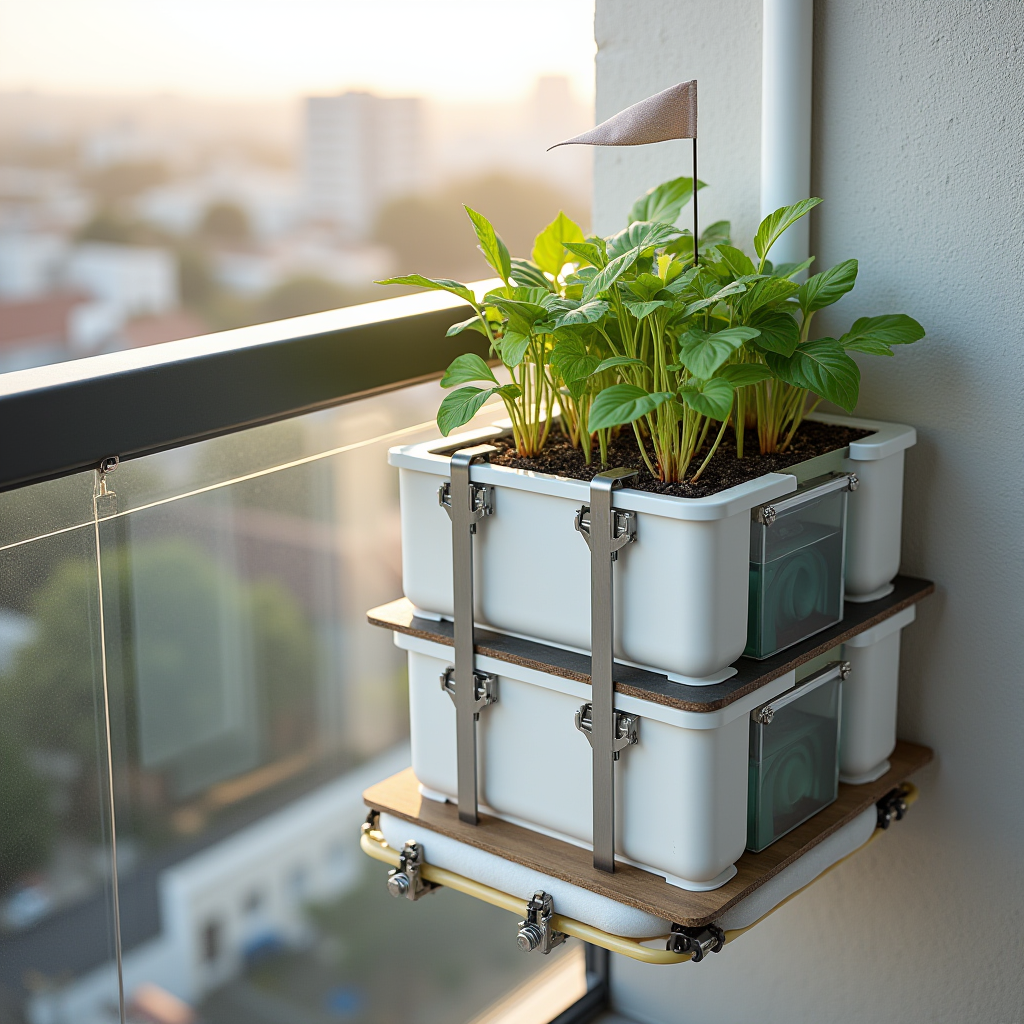
- Use a load-spreading base under every heavy item:
- Example: a 20 to 25 mm exterior-grade plywood board or composite deck panel under your main reservoir and tower frame.
- Support tall structures with wide bases or frames that sit on multiple feet, not small stands or narrow rails.
A simple rule of thumb: wherever you would not stand all day with a backpack full of bricks, do not park a full reservoir.
Step 4: Build real secondary containment
Your entire hydroponic footprint should sit inside one or more containment trays that can capture any plausible leak or overflow.
- Target containment volume equal to at least your largest single reservoir.
- Use durable plastic trays, mortar mixing tubs, or shallow flood tables to create pans.
- If needed, build custom trays from timber frames lined with pond liner or EPDM.
- Ensure trays sit flat and are not blocking the balcony’s official drain.
You are aiming for a closed-loop balcony system: all NFT returns, drip runoff, and even accidental bursts land in a tray that either drains back to the reservoir or can be manually pumped or siphoned out for disposal in a proper drain.
To keep HOAs calm, include these features:
- No discharge lines connect to balcony scuppers or building drains.
- No overflow path leads to the balcony edge.
- Everything is visually contained: if someone looks over the railing, they see a tidy box, not a spaghetti of pipes.
Step 5: Engineer for wind stability
For stackable NFT or 3D-printed drip systems, stability is as important as flow rate.
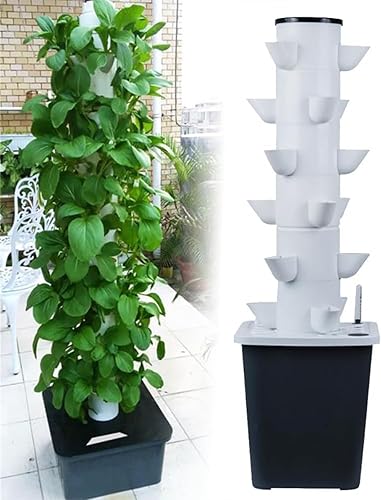
- Keep tower height modest, especially on high floors. Around 1.5 to 1.8 m is a practical upper limit for exposed balconies.
- Anchor towers and channel stacks to freestanding frames inside your containment tray, not to the balcony railing.
- Use ballast in the base: gravel-filled planters, water ballast tanks, or sandbags hidden inside the stand.
- Design frames and printed parts to be wind-permeable: avoid solid screens that catch gusts.
If your balcony is extremely windy, consider spreading capacity horizontally (wider frames, more channels at lower height) instead of going vertical.
Step 6: Choose the right system style for balconies
For balcony use, stackable NFT or drip often beat deep, heavy DWC. Here is how I would rank them for a typical apartment balcony:
- Top pick: NFT / recirculating drip with modest reservoir and good containment. Light water volume in channels, easy to stack, and efficient for leafy greens.
- Second pick: Kratky containers for simple, passive grows in smaller buckets or totes. Excellent when power access is limited or you want minimal failure modes.
- Use with caution: large DWC. Great growth, but heavy and more water to manage. If you do it, split volumes across several containers and beef up containment.
For fruiting crops on a balcony, I like hybrid systems: a recirculating drip ring feeding 3D-printed or off-the-shelf pots, all sitting in a drain-back tray that returns to a modest reservoir.
Step 7: Design 3D-printed parts for balcony duty
If you are printing your own NFT channels, manifolds, or tower segments:
- Use PETG, ASA, or another UV-resistant, water-stable filament for all parts exposed to sun or carrying load.
- Print with at least 3 to 4 perimeters and 40 to 50 percent infill for structural parts.
- Break tall towers into modular segments that can be individually replaced.
- Use gasketed or O-ring joints between sections to tolerate thermal expansion without leaking.
- Where possible, use mechanical fasteners or frames to support printed parts, instead of relying purely on layer adhesion.
For food-contact areas, stick with filaments that have clear safety data or are rated for potable water contact, and keep your post-processing simple: clean, rinse, and avoid coatings that are not meant for drinking water.
Step 8: Power, cables, and outdoor rating
Your pumps, timers, and controllers may be small, but you still have to treat balcony power like an outdoor installation.
- Use outdoor-rated extension cords and weatherproof power strips or boxes.
- Keep all power connections above the highest water line in your containment trays.
- Route cords so they do not create trip hazards at the balcony door.
- If possible, plug into a GFCI/RCD-protected circuit.
Also think about lightning and storms. If extreme weather is forecast, your system should have a “storm mode”: pumps off, reservoirs secured, and loose items removed or tied down.
Step 9: pH, EC, and nutrient management for small outdoor systems
Balcony systems are small, so they change quickly. You cannot rely on the slow, buffered behavior you get from big indoor reservoirs.
- Check pH and EC two to three times per week in mild weather, and daily during heat waves.
- Keep pH in the 5.5 to 6.5 range for most leafy crops.
- Use a balanced hydroponic nutrient suitable for your crop type (leafy vs fruiting).
- Top up with plain water when EC rises as the level drops; add nutrient stock when EC dips while level stays stable.
- Fully change reservoir solution every one to three weeks, depending on volume and plant load.
When you drain, do not dump nutrient on the balcony or over the edge. Carry it to a proper drain, or if local rules allow, dilute and use on soil-grown plants at ground level.
Step 10: Document your system for HOA and code peace of mind
Before you switch on, assemble a one-page summary for your building management or HOA. Include:
- A simple top-down sketch of the balcony with system footprint.
- Total system water volume, estimated total weight, and where it sits.
- Photos or diagrams showing containment trays and that no water reaches balcony drains or edges.
- A note that no drilling has been done, and no parts are attached to railings or structure.
- A short statement that the system uses less water than equivalent potted plants and is run as a clean, contained installation.
This shifts the conversation from “someone has a weird setup out there” to “this is a planned, low-risk installation,” which is much harder to object to.

4. What to watch long-term on a balcony NFT/drip system
Once your system is running, most of your work is about monitoring and small adjustments, not big rebuilds.
Structural and stability checks
- Every month, check for any signs of sagging, cracking, or stress in printed parts and supports.
- Look for movement in towers or channel stacks when the wind picks up.
- Confirm that load-spreading bases are still dry, flat, and not rotting or corroding.
- After any major storm, visually inspect every joint and fitting.
If a part shows UV chalking, warping, or cracks, replace it before it fails. This is where modular tower segments and standardized connectors pay off.
Containment and drainage vigilance
- Check containment trays for standing water and clean them periodically so they do not become algae ponds.
- Test your worst-case scenario once or twice a season: simulate a blocked NFT return or a failed dripper and see where water goes.
- Keep balcony drains clear of leaves and debris so rain can still escape properly.
Your goal is to make sure that every liter of nutrient solution is either in the system, in the containment tray, or in a bucket on its way to a proper drain.
3D-printed component maintenance
- UV and heat will eventually age plastics. Inspect high-stress parts like brackets, tower joints, and threaded fittings at least every few months.
- Keep reference CAD or STL files handy so you can reprint or improve parts as you see how they behave in the real world.
- Consider gradually upgrading critical parts to more robust materials (ASA, PETG with UV additives, or even metal) if you see recurring wear.
System performance: plants, pH, EC, and yield
- Log pH, EC, and temperature along with visual notes on plant health.
- Use data to tweak nutrient strength and change intervals for your specific balcony microclimate.
- Watch how wind and sun exposure affect transpiration, and adjust reservoir volume or shading if solution temperatures climb too high.
- Harvest regularly to keep canopy weight balanced and reduce wind load on the system.
All of this feeds back into smarter design decisions. The next set of printed parts you design will be better tuned to your balcony’s real-world abuse.
HOA and neighbor relations
- Keep the balcony tidy: wipe spills, trim plants, and keep equipment organized.
- If you ever have a leak or spill, be the one to report it first and show how you have changed the design to prevent repeats.
- Occasionally sharing fresh herbs or greens does more for long-term acceptance than any technical explanation.
If you treat your system like a permanent upgrade to your home rather than a temporary science project, it will look and behave like one.
Putting it all together
A safe, compliant balcony hydroponic system is not complicated, but it is intentional. You:
- Respect the balcony’s structural limits and spread loads.
- Design for zero uncontrolled discharge using real containment.
- Engineer stability against wind for every tall or stacked element.
- Choose materials and printing strategies that survive UV and heat.
- Document the system so HOA and building management see it as controlled and low-risk.
Once those boxes are ticked, you get to focus on the fun stuff: dialing in nutrient profiles, tuning NFT flow, and printing clever new modules that squeeze more yield out of your limited square meters without triggering a single complaint.

As an Amazon Associate, I earn from qualifying purchases.