Build a Hydroponic Tomato Greenhouse in Romania (2026): Permits, Energy (CHP/PPA), Water & CO2 Compliance Guide
The common mistakes Romanian tomato investors still make in 2026
"You just build the glass, hook up gas, and plant." That assumption is still killing hydroponic tomato projects in Romania.
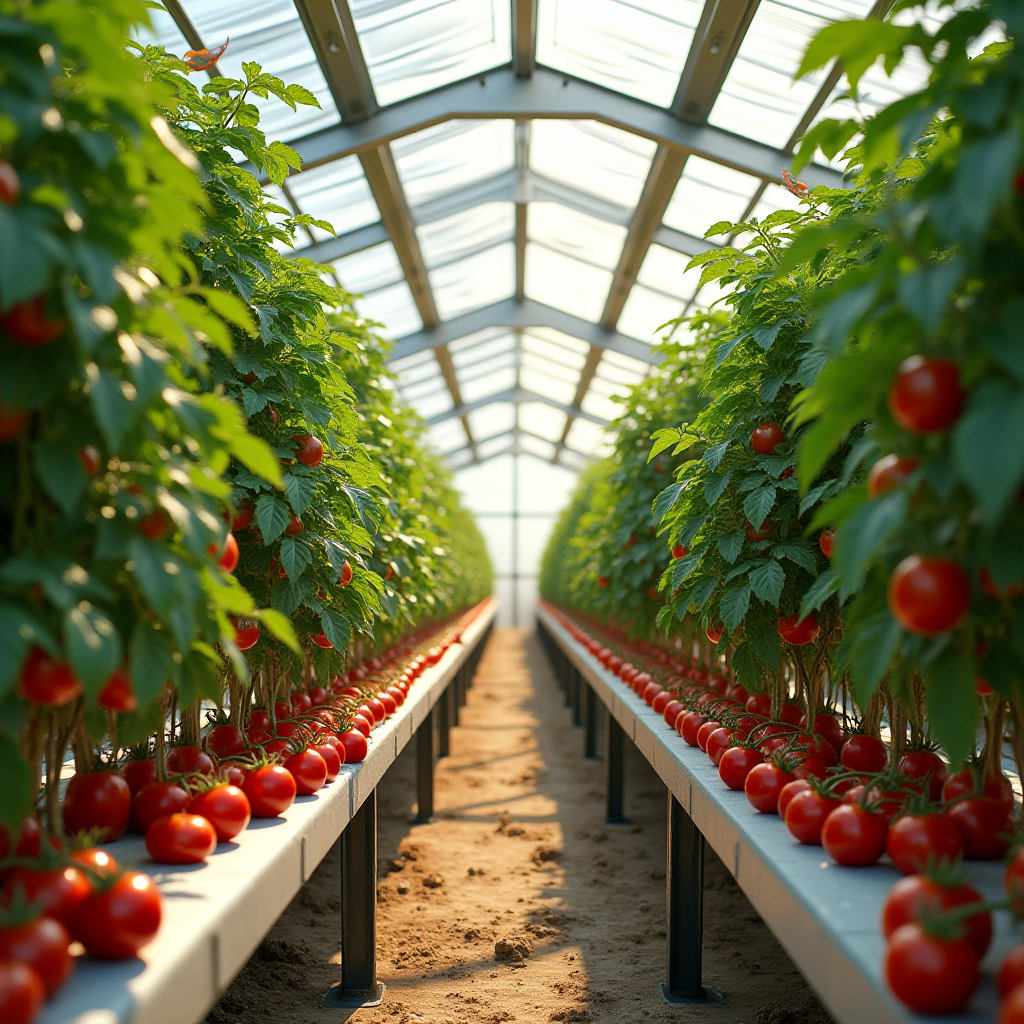
What is actually happening on the ground is different. The big new hydroponic tomato project near Sibiu did not start with rockwool slabs and drippers. It started with a permit stack, an energy strategy, and a water plan that would survive real Romanian inspections and energy prices, then moved into hydroponic design. This recent Grozine report shows what a modern, well-thought-out system in Romania looks like: suspended mineral wool, closed-loop irrigation, UV disinfection, high-spec heating and lighting, and strict water quality monitoring.
If you want to be operating, not arguing with authorities or fighting energy bills, you need to avoid a specific set of mistakes that keep repeating on 2026 projects.
1. Treating permits as a formality instead of a critical design constraint
Many growers secure land, sign a greenhouse contract, and only then start asking about urbanism certificates, building permits, environmental approvals, and water rights. By that point, the greenhouse spec often does not match what the local authorities will accept.
Romania is not a "build first, regularize later" market for large hydroponic tomato sites. Once you install a few hectares of glass and steel, you are visible to every inspector in the county.
2. Locking into an energy source without running a full heating + CO2 strategy
Romanian projects still sign long gas contracts or CHP deals before modelling real tomato greenhouse loads: base heat, night setback, dehumidification, and CO2 dosing targets.
The high-performing glass eco-greenhouse project profiled in the EU CAP Network case study did the opposite. They sized their cogeneration system to deliver heat, electricity, and flue CO2, and to sell surplus power to the grid, cutting net emissions by about 0.2 kg CO2 per kWh generated. That kind of thinking protects margins when gas and power prices move.
3. Assuming water is "abundant" and deferring abstraction and discharge permits
Hydroponic tomatoes are efficient per kilogram of yield, but a multi-hectare glasshouse still moves serious volumes of water. Investors commonly drill wells and pour tanks first, leaving permits to the end. That is backwards.
Romanian water authorities expect you to show where your water comes from, how much you intend to use, how you will recirculate nutrient solution, and what happens to reject water and drainage. Closed-loop irrigation and UV disinfection, like the system used near Sibiu, reduce discharge and help with approvals, but only if they are documented from the start. The Roșii Românești investment profile underlines just how central groundwater, rainwater retention basins, and reuse of condensate and ventilation water have become.
4. Underestimating food safety and MRL compliance for hydroponic tomatoes
Many teams think "hydroponic" means automatically clean. It does not. You are still operating within EU pesticide residue rules, hygiene expectations, and buyer audits.
Supermarkets and export buyers want written procedures, cleaning logs, chemical use records, and verified nutrient and irrigation water quality. If you plan to sell into organized retail, you will be treated like any other professional vegetable supplier.

Why these mistakes keep happening in Romanian hydroponic tomato projects
None of these issues are mysterious. They keep repeating because greenhouse designers, energy developers, and investors often plan in silos instead of building a single, integrated compliance and operations plan.
1. Permits are treated as paperwork, not design inputs
Romania follows EU law but with local flavor. Zoning, environmental approvals, and water permits sit with different authorities. If you treat each as a separate box to tick, you end up redesigning the greenhouse multiple times.
For example:
- A building permit may force you to shift the greenhouse footprint or reduce height.
- An environmental screening or EIA may require drainage collection and storage volume you did not plan for.
- A water abstraction license may cap the annual withdrawal below your original yield model.
Every change hits your hydroponic layout, nutrient tank sizing, and even row spacing if you lose area.
2. Energy teams chase kWh price instead of climate stability and CO2
Most pitch decks fixate on "cheap megawatt-hours". What you actually need in a tomato glasshouse close to 100,000 m² is stable climate: 18-22 °C base temperatures, tight humidity control, and 600-1,000 ppm CO2 most of the day for high-yield crops, as highlighted in this hydroponic tomato guide.
A bare gas boiler plus grid power can look cheap on paper but gives you no CO2 stream and exposes you to power price spikes. CHP can give you heat, electricity, and flue CO2 in one unit, but only if it is sized and operated around tomato loads, not generic industrial assumptions, as shown in the glass eco-greenhouse example.
3. Water rules are tightening, while hydroponic discharge is under more scrutiny
EU water directives are pushing member states, including Romania, to pay more attention to nitrate and phosphate discharge. Hydroponic operations are good at recirculating nutrient solution, but they still produce reject water and filter backwash.
Authorities now expect robust answers to basic questions:
- How much water will be abstracted yearly?
- What percentage will be recirculated?
- How will you treat and dispose of nutrient-rich drainage?
- What monitoring will you use for pH and EC on discharge lines?
Closed-loop irrigation with UV disinfection, like that used by Roșii Românești near Sibiu and many Novagric projects in Eastern Europe, makes this conversation easier but does not remove the need for permits. Novagric’s greenhouse case studies in Romania illustrate how recirculation systems and climate control are already standard.
4. Food safety is moving from "nice to have" to hard requirement
Major buyers in the region are aligning with stricter food safety standards and pesticide residue limits. Hydroponic tomato growers in glasshouses are expected to match or exceed these benchmarks, not simply "beat field tomatoes".
If you cannot show a clean, auditable trail for plant protection products, nutrient solution management, and hygiene, serious retail contracts will not stick. Guides on hydroponic crop safety and compliance are increasingly used as checklists during audits.

How to fix it: a 2026-ready roadmap for a compliant Romanian tomato greenhouse
Let us translate all this into a step-by-step plan. The goal is simple: by the time you sign your greenhouse and energy contracts, your permits, water strategy, and food-safety system are already designed on paper.
Step 1: Site selection and permit pre-screen (months 0-3)
- Check local zoning (PUG, PUZ) early. Confirm that "agricultural constructions" or "greenhouses" are allowed, and whether you need a zoning plan update.
- Request an urbanism certificate (certificat de urbanism). This document lists which approvals you will need for the building permit, including environmental, water, and grid connection opinions.
- Engage an environmental consultant. They will check whether your project triggers environmental impact assessment (EIA) obligations and what documentation is expected by 2026 standards.
- Open discussions with the local water authority (Administrația Națională „Apele Române"). Confirm the feasibility of groundwater abstraction, surface water use, or a mix with rainwater harvesting.
- Check grid capacity. Talk to the distribution operator about connection options, costs, and timelines. This matters if you want a solar PPA on-site or plan to export CHP power to the grid, as discussed in this renewable energy law overview.
Step 2: Integrated technical concept (months 2-5)
Bring your greenhouse designer, energy engineer, and permitting consultant to the same table. Design one concept that meets agronomic, regulatory, and financial objectives.
- Define your target area and yield. For example, 8-10 ha under glass, aiming for 60-80 kg/m² per year, in line with modern hydroponic systems described by Hydroponic Systems.
- Choose the growing system. In Romania, suspended mineral-wool slabs with drip irrigation and closed-loop fertigation are now standard for tomatoes, as in the Sibiu project reported by Grozine.
- Size the fertigation room and water storage. Plan separate tanks for fresh water, nutrient stock solutions (A/B), drainage collection, and disinfection (UV or ozone). Build in sampling points for pH, EC, and microbiological testing.
- Model heating and CO2 loads. Use at least 10-year climate data for your region. Work out hourly heat demand curves, CO2 requirements, and how much of that can be covered by CHP, gas boilers, or biomass.
- Draft your water balance. Include groundwater, rainwater retention basins, condensate recovery, and overflow or emergency discharge scenarios, similar to the approach near Sibiu with wells, basins, and reuse of condensation and ventilation water.
Step 3: Decide your energy strategy: CHP, solar PPA, or hybrid (months 3-6)
For a modern Romanian hydroponic tomato greenhouse, three main models make sense:
- CHP-centric model with flue CO2
- A gas-fired CHP unit sized primarily on winter heat load.
- Flue gas is cleaned and injected into the greenhouse as CO2, boosting yields while keeping stack emissions low.
- Surplus electricity is sold to the grid under standard power market rules. CAP-funded projects like the glass eco-greenhouses documented by the EU CAP Network have proven this setup, reporting rough emission reductions of 0.2 kg CO2 per kWh.
- Grid + solar PPA model
- The greenhouse uses grid electricity and high-efficiency gas boilers or biomass for heat.
- A third-party solar developer installs a PV plant on-site or nearby and sells power to you under a long-term PPA at a fixed price.
- Romania’s PV market is supported by EU funds like the Modernisation Fund and Cohesion Policy, as detailed in this techno-economic analysis and agrivoltaics guidance.
- You still need a CO2 solution (liquid CO2, pure CO2 from industry, or smaller CHP).
- Hybrid CHP + PPA model
- Medium CHP sized for base heat and CO2 demand.
- Solar PPA to shave daytime electricity costs.
- Grid as backup, with the option to export when you have surplus.
The key is to run financial models that combine:
- Capex and Opex for each option.
- Expected CO2 concentration in the greenhouse.
- Energy price sensitivity.
- Eligibility for EU CAP or energy-related grants.
Step 4: Lock in water abstraction and discharge permits (months 4-8)
By now, you should have a clear water balance and greenhouse layout. Turn that into a formal permitting package for "Apele Române" and environmental authorities.
- Water abstraction permit:
- Hydrogeological study for wells, or hydrological data for surface water.
- Annual volume requested, split by source.
- Planned efficiency measures: closed-loop fertigation, condensate reuse, rainwater capture.
- Discharge permit:
- Expected discharge volumes and composition.
- Treatment steps before discharge (e.g., solids separation, pH adjustment, dilution).
- Monitoring plan for pH, EC, and possibly nitrates or phosphates.
- Emergency overflow design for heavy rain or system failure.
A strong hydroponic design helps your case. Closed irrigation circuits with UV disinfection and minimal discharge, like the systems cited by Novagric, show that hydroponics can meet tough water standards when engineered correctly.
Step 5: Build your food safety and MRL compliance system (months 4-10)
At the same time, put your food-safety backbone in place. You can retrofit pipes and wires. You cannot retrofit trust after failing a residue test.
- Choose a standard: GlobalG.A.P., Tesco Nurture, or equivalent. Buyers will tell you what they need.
- Write procedures for:
- Nutrient mixing and stock solution handling.
- Cleaning and sanitizing irrigation lines, tanks, and filters.
- Water sampling for microbiology, pH, EC, and heavy metals.
- Plant protection product use, with strict records.
- Design the greenhouse for hygiene:
- Clear separation between "dirty" and "clean" zones.
- Hand-washing and boot-wash stations.
- Easy-to-clean floors and drains.
- Integrate MRL strategy: Choose products and IPM practices that keep you well below residue limits. Hydroponic tomatoes respond well to biological controls and targeted sprays, as explained in multiple tomato production guides like NC State’s greenhouse tomato resource.
Step 6: Design the hydroponic system around pH, EC, and drain management (months 6-12)
You are now ready to refine the hydroponics itself. Focus on stable chemistry first, plant comfort second, and automation third.
- System choice: For high-wire tomatoes in Romania, the standard is slab culture on hanging gutters with drip irrigation. Kratky or simple DWC do not scale well at this level, but lessons from pH and EC control in those systems still apply.
- Target ranges: For hydroponic tomatoes, a pH of 5.5-6.5 and EC between 2.0 and 3.5 mS/cm, depending on growth stage, are widely recommended, as noted in this hydroponic tomato guide.
- Drain strategy:
- Monitor drain percentage and EC to control root-zone salinity.
- Blend drain back into the feed solution in a controlled way.
- Divert final reject water to the treatment and discharge system defined in your permits.
- Instrumentation:
- Inline pH and EC sensors on both feed and drain lines.
- Data logging for nutrient solution parameters, linked to your food-safety and compliance records.

What to watch long-term: benchmarks and compliance pressure points
Once you are up and running, the work shifts from permits and construction to daily monitoring and staying ahead of regulators and buyers.
1. Energy and CO2 performance benchmarks
- Heat use: Track kWh of heat per kilogram of tomatoes produced. Compare monthly results against your original model and against case studies like the EU-backed glass eco-greenhouse project.
- CO2 use: Monitor kg of CO2 supplied per kg of fruit and average ppm in the greenhouse during active periods. If you run CHP, check that your CO2 capture and use align with your environmental commitments.
- Electricity mix: Keep a clear breakdown of grid vs on-site CHP vs solar PPA. This data supports both ESG reporting and future grant applications.
2. Water and discharge compliance
- Abstraction volumes: Log daily and monthly withdrawals from each source. Keep usage below permitted volumes, with a safety margin.
- Discharge quality: Sample discharge water according to your permit conditions. Track pH, EC, and any mandated nutrients. If results drift, tune your recirculation ratio and nutrient recipes.
- System integrity: Inspect tanks, liners, and drainage channels regularly. A single leak can undermine your claims about closed-loop operation.
3. Food safety and MRL trends
- Residue testing: Schedule regular MRL checks on fruit, even if buyers are not asking yet. Surge retail demand often comes with last-minute testing.
- Hygiene audits: Run internal audits against your chosen standard (GlobalG.A.P. or similar). Close nonconformities quickly.
- Water microbiology: Test water at intake, after treatment, and on the dripper line. Closed systems are powerful, but any contamination can spread quickly.
4. EU CAP and funding opportunities
For 2024-2026, Romania has access to substantial EU funds for energy and agricultural modernization, including the Modernisation Fund and CAP-linked programmes, as outlined in this CAP good practice example and renewable energy law reports. Successful hydroponic tomato projects often use grants for:
- High-efficiency glazing and screens.
- Advanced fertigation and irrigation monitoring.
- CHP and CO2 recovery systems.
- On-site solar PV linked to greenhouse operations.
Keep your documentation sharp: energy data, water-use logs, and production records are exactly what grant evaluators and auditors want to see.
5. Continuous nutrient and pH/EC optimization
Hydroponic tomatoes reward attention to detail. Regularly review:
- Plant sap analysis vs nutrient recipes.
- Relationship between EC, fruit quality, and yield.
- pH stability in each zone of the greenhouse.
Use your fertigation log as a diagnostic tool. As noted by multiple hydroponic tomato references, including this technical article on hydroponic tomatoes, nutrient management and monitoring are where commercial margins are often won or lost.

Pulling it together: from idea to tomatoes on the truck
Romania is now firmly on the hydroponic tomato map, with projects like the large Sibiu greenhouse showing what is possible when design, energy, water, and compliance are aligned, as reported in Grozine. The playbook is clear:
- Treat permits as early design constraints, not afterthoughts.
- Pick an energy strategy that gives you both stable climate and reliable CO2.
- Engineer water abstraction, recirculation, and discharge to satisfy regulators and protect your system.
- Build food safety and MRL compliance into daily operations from day one.
- Use precise nutrient, pH, and EC management to turn compliance into consistent, high-quality yields.
Follow that sequence, and by the time 2026 inspections roll through, you will not be explaining why you are different. You will already be shipping compliant, high-yield hydroponic tomatoes into a market that now expects this level of professionalism from Romanian glasshouses.
As an Amazon Associate, I earn from qualifying purchases.