“If you just throw more heaters and lights at winter, the bill grows faster than the plants.”
That belief still drives how a lot of Canadian greenhouses and vertical farms are built: more BTUs, more micromoles, more tonnage. Then January hits, the energy bill doubles, and you start wondering if year-round local production is actually viable.
It is viable. But you need to treat the facility like a closed-loop energy system, not just a box of plants with lights on top.
Recent coverage of Canadian controlled environment agriculture has made this clear: high-tech greenhouses and vertical farms can carry production through winter, but only when energy, climate control, and incentives are designed together. As experts interviewed by Radio-Canada’s international service point out, modern greenhouses and vertical farms are already pushing Canada toward more self-sufficiency in produce, especially in Quebec and Ontario, where large heated greenhouses supply winter greens and tomatoes (see this overview). Dynamic LED systems from companies like Sollum Technologies are being deployed to tune spectra and intensity in real time to crop and weather conditions, which helps trim winter power use while stabilizing yields as reported here.
This playbook focuses on what growers still lack: a clear, evidence-based roadmap for whole-facility winter energy integration in Canadian conditions, plus where to find the money on the table in 2025–2026.
We’ll walk through the most common design mistakes, why they happen, and how to fix them with dynamic LEDs, heat recovery dehumidification, thermal curtains, hydronic heat pumps, and CO2 planning. Along the way, you’ll see where federal, provincial, and utility incentives can soften the capital hit.
1. Common mistakes in Canadian greenhouse & vertical farm energy design
1.1 Designing “lights and heat” instead of an integrated energy system
The first mistake is thinking in equipment lists instead of energy flows. A lot of projects spec LEDs, boilers or unit heaters, a basic dehumidifier, and call it done. In winter you then pay three times:
- For electricity to run lights that also generate waste heat.
- For fuel or electricity to add more heat via separate systems.
- For dehumidification that throws that paid-for heat outside.
In a Canadian January, that is brutal on cash flow.
1.2 Over-lighting and under-controlling LEDs
Dynamic LED systems are powerful tools, but many installations use them like old HPS: fixed schedules, fixed intensity, and no serious feedback from PAR sensors or crop response. The result:
- Excess PPFD on cloudy days because you “set it and forget it.”
- Missed opportunity to drop intensity during generative phases or late-cycle.
- Wasted thermal energy that could be used more intelligently.
Meanwhile, growers using adaptive lighting, like the dynamic systems highlighted in Sollum’s recent deployments, are modulating spectra and output in real time to match DLI targets and weather variability, clipping energy use without sacrificing yield as noted in these reports.
1.3 Treating dehumidification as a side issue
In Canadian winters, dehumidification is a heat problem, not just a moisture problem. If you use plain refrigerant dehumidifiers or open-venting to dry the air, you are literally exhausting paid-for heat and often pulling in very cold, dry air that then must be reheated.
Hydroponic systems like deep water culture (DWC) and NFT carry high transpiration loads per square meter of floor area. If you do not design for that latent load and tie it into your heat recovery strategy, you end up oversizing heaters, undersizing dehumidification, and fighting disease pressure all winter.
1.4 Ignoring thermal curtains and envelope performance
Many operations still run single-layer glazing or poly with minimal curtain use. That worked when fuel was cheaper. Today, skipping a properly specified thermal curtain is like leaving the greenhouse door cracked open all night.
Even in vertical farms, poor insulation around walls, ceilings, and doors can force HVAC systems to run harder just to maintain setpoints, especially when racks are packed with high-transpiration crops.
1.5 CO2 as an afterthought
Growers often rush CO2 decisions at the end of the design phase. That leads to mismatches between heating/venting strategy and CO2 delivery:
- Combustion-based CO2 in a structure that needs frequent venting to handle humidity.
- Bottled CO2 in a facility with high infiltration losses through leaky envelopes.
- No plan for how CO2 and DLI interact under dynamic LEDs.
In cold climates, every vented cubic meter of warm, enriched air is a double hit: lost heat and lost CO2.
1.6 Incentives left on the table
Finally, the financial miss: many growers treat rebates and grants as “nice-to-have” instead of as part of project financing. In 2025–2026, that is a lost advantage.
Canada’s federal climate initiatives aggregate a wide range of efficiency and clean-tech incentives, and the federal climate solutions portal lists province-by-province programs that include commercial operations as outlined here. Natural Resources Canada’s directory also centralizes ENERGY STAR-linked rebates from utilities and provinces in this resource. Greenhouse-specific incentive programs highlighted in industry coverage show that some utilities are already paying growers per micromole of efficient lighting capacity installed and offering support for heat pumps and heat recovery as seen here.

2. Why these mistakes keep happening (and what they cost in winter)
2.1 Fragmented design: electrical, mechanical, and agronomy in silos
Most projects still run with separate teams: the grower, the mechanical engineer, the electrical contractor, and sometimes an energy consultant. They often work from different assumptions:
- The grower defines crop mix, target yields, and maybe a wish list of PPFD and temperature/humidity setpoints.
- The mechanical engineer sizes heating and cooling from envelope and equipment loads.
- The electrical team sizes panels and feeds based on nameplate wattage, not operational strategy.
No one is tasked with closing the loop and asking: how do we move energy around this system before we buy more of it from the grid or the gas line?
2.2 Misunderstanding dynamic LED ROI in Canadian winters
Dynamic LEDs are often judged only on “kWh per micromole” and fixture cost. That is too narrow. In a Canadian winter, LED ROI has at least four components:
- Electrical efficiency: micromoles per joule compared to legacy HPS.
- Thermal profile: less radiant heat to the canopy but significant convective heat in the space.
- Control granularity: ability to ramp, dim, and shift spectra with weather and tariff windows.
- Yield and quality response: more uniform crops, better morphology, and higher marketable yield.
When you add dynamic control, you can flatten power demand curves, chase low-tariff hours, and coordinate with heat recovery. Case reports from dynamic lighting providers in Quebec and Ontario show growers shaving winter lighting costs while maintaining or improving yields by targeting crop-specific daily light integrals instead of blasting maximum intensity constantly as discussed here.
2.3 Underestimating latent loads from hydroponics
A dense hydroponic lettuce facility can easily transpire several liters of water per square meter per day. In DWC or high-density NFT, the root system is vigorous and transpiration is high, especially under strong LEDs.
If you do not model this latent load and pair it with heat recovery, the facility will be cold and wet, or hot and wet, depending on how your equipment fights with itself. You pay heavily for electricity or gas just to juggle heat and moisture instead of reusing them.
2.4 Over-reliance on combustion heat without heat recovery
It is still common to see gas boilers or unit heaters providing all the winter heat without any meaningful heat recovery. That is simple to design but expensive to operate. You buy fuel, burn it, and discard a large fraction of the useful thermal energy through flues and ventilation.
Some greenhouse-focused utility programs are already supporting aerothermal and geothermal heat pumps, heat storage tanks, and advanced controls because they know these measures can provide the same or better climate stability at lower operating cost as outlined here.
2.5 Incentive complexity and time pressure
Finally, many operators are simply busy growing. Tracking federal, provincial, and utility incentives can feel like another full-time job.
The federal climate solutions portal and the energy-efficiency financial incentive directory list a wide range of programs by province, sector, and technology, including envelopes, lighting, HVAC, and process equipment as seen here, and here. Many utilities then layer on their own greenhouse or agricultural offerings. If you do not bake incentive research into the early design phase, you end up specifying equipment that just misses eligibility thresholds or application deadlines.

3. How to fix them: a practical integration roadmap for 2025–2026
3.1 Start with an energy & crop model, not a fixture list
Whether you are building a 1,000 m² greenhouse or a 200 m² vertical farm, the process is the same:
- Define crop and yield targets
- Species and cultivars (lettuce, basil, tomatoes, strawberries, etc.).
- Target grams per square meter per cycle and annual turnovers.
- Hydroponic system type (NFT, DWC, substrate slabs, vertical towers, aeroponic walls).
- Set climate and light requirements
- Target PPFD and DLI by crop and phase.
- Temperature and RH bands that keep VPD in the right zone.
- CO2 setpoints under high light.
- Build a monthly energy model
- Use local weather data for your province.
- Model conduction and infiltration losses through the envelope.
- Add lighting, equipment, and transpiration loads from the crops.
You can do this with dedicated greenhouse modeling software, or with a careful spreadsheet and online climate data. The key is to estimate heat demand, cooling and dehumidification loads, and lighting hours by month before you buy equipment.
3.2 Dial in dynamic LED strategy for Canadian winters
For LEDs, think system, not just fixtures:
- Use dynamic fixtures with granular dimming and spectrum control where budget allows. Systems like the dynamic solutions deployed by Sollum in Quebec demonstrate that you do not need full power all day; instead, you target DLI and plant responses while smoothing demand peaks as described here.
- Integrate PAR sensors and weather data so your control system can modulate output based on real-time sunlight (for greenhouses) or off-peak tariffs.
- Coordinate lighting schedules with CO2 and heating. For example, in January, you might run higher PPFD and CO2 during the warmest part of the day, reduce output toward evening, and use captured daytime heat through hydronic storage to carry night temperatures.
- Model ROI by comparing a static LED profile versus a dynamic one. Include utility rebates where available, which often require specific efficacy thresholds or control features.
3.3 Make dehumidification work for you with heat recovery
For hydroponic-heavy operations (NFT ladders, DWC beds, vertical aeroponic towers), treat dehumidification as a thermal resource:
- Choose heat-recovery dehumidification where possible. Systems that reclaim latent heat and re-inject it into the hydronic loop or supply air can offset a large fraction of winter heating demand.
- Design condensate management. You are condensing nutrient-free water that can be reused for top-ups after proper treatment, which reduces water consumption.
- Balance RH, VPD, and energy use. Do not chase extremely low humidity; aim for a VPD range that keeps disease in check while limiting over-drying and unnecessary dehumidifier runtime.
3.4 Use hydronic heat pumps and storage as the backbone
A hydronic loop with heat pumps gives you flexibility:
- Air-to-water or water-to-water heat pumps feed finned tubes, radiant floors, or fan coils in the greenhouse or vertical farm.
- Thermal storage tanks let you harvest heat during lower-tariff hours or from dehumidification and release it overnight.
- Integration with backup boilers gives resilience during extreme cold snaps.
Greenhouse-focused utility programs in Canada are already recognizing these as qualifying “innovative measures,” including aerothermal and geothermal heat pump designs or buffer tanks that smooth loads as documented here.
3.5 Get serious about thermal curtains and envelope
For greenhouses:
- Install a high-performance thermal curtain and actually use it every night in winter, plus during the coldest, darkest parts of the day.
- Model curtain effect in your energy calculations to quantify payback.
- Seal leakage around doors, vents, and penetrations; CO2 savings alone can justify the effort.
For vertical farms and indoor CEA spaces:
- Upgrade wall and roof insulation to cost-effective levels for your climate zone.
- Use vestibules or airlocks at frequently used doors to reduce infiltration.
3.6 Plan CO2 as part of the energy system
CO2 strategy must match your heating and ventilation profile:
- Combustion-based CO2 (boilers, unit heaters) works best when you can keep vents mostly closed and your system is designed for low infiltration.
- Bottled or centralized liquid CO2 is often a better fit for vertical farms with tight envelopes and mechanical ventilation.
- Coordinate CO2 setpoints with light. Under dynamic LEDs, you might run higher CO2 only during high PPFD periods, cutting flow when lights dim.
When modeled correctly, CO2 enrichment in cold climates can substantially boost winter yields without a proportional rise in energy use. The key is reducing venting and leakage so that CO2 stays in the space.
3.7 Align your design with 2025–2026 incentives
Before you finalize equipment, map your project against current incentives:
- Federal and cross-Canada resources
- Use the climate solutions incentives portal to see national and provincial programs that support efficiency and clean tech for businesses, including equipment like heat pumps and efficient lighting as outlined here.
- Check Natural Resources Canada’s ENERGY STAR rebates directory to identify utility and provincial rebates for high-efficiency LEDs, heat pumps, and building envelope upgrades via this directory.
- Province-specific programs
- From the financial incentives-by-province listing, filter programs relevant to commercial buildings and agriculture. Many provinces support efficient HVAC, dehumidification, and lighting that vertical farms and greenhouses can use as shown here.
- Cross-check with utility agricultural or greenhouse programs; industry reporting shows that some electric utilities offer per-fixture or per-micromole rebates for efficient greenhouse lighting and support for heat recovery and heat pumps as detailed here.
Do this before you send purchase orders. Slight changes in fixture efficiency, control features, or heat pump COP ratings can determine whether equipment qualifies for thousands of dollars in support.
3.8 Tie it back to hydroponics: system choices and EC/pH control
Your hydroponic system choice changes climate loads:
- NFT and DWC have high transpiration per floor area. Plan for higher latent load and strong air circulation.
- Kratky and low-energy systems are attractive for smaller operations or satellite greenhouses where power is limited. In cold climates, pairing Kratky beds with well-insulated structures and minimal, targeted heating can produce winter greens at very low energy per kilogram.
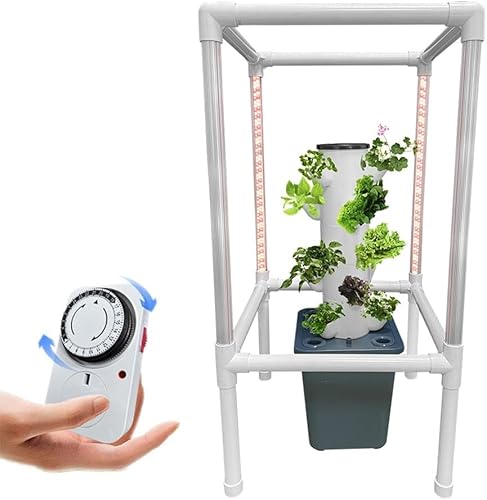
- Vertical towers and aeroponics compress a lot of leaf area into a small footprint, which pushes both light demand and transpiration up; you must design dehumidification and air distribution carefully.
Across all systems, stable EC and pH make your climate investments pay off. With consistent root-zone conditions, plants can fully exploit the improved light and CO2 environment. Many control systems and sensors that help keep pH and EC in check also qualify under broader process efficiency or automation incentives, depending on the province and utility.
4. What to watch long-term: metrics, optimization, and policy shifts
4.1 Track the right KPIs
Once your facility is running, your job is to continuously tighten the system. Core metrics to track:
- kWh per kilogram of product, broken down by lighting, HVAC, and pumps.
- Heat pump COP over seasons, especially in your coldest months.
- Dehumidification kWh per liter of water removed.
- CO2 consumption per kilogram of product.
- Crop yield and quality per square meter and per rack level.
Without these numbers, you are guessing. With them, you can compare scenarios: higher DLI vs lower DLI with extended photoperiod, higher vs lower CO2, different night temperature strategies, and so on.
4.2 Seasonal tuning of light, heat, and CO2
Expect to run different playbooks by season:
- Winter: Maximize heat recovery, run tighter CO2, and lean on dynamic LEDs to chase tariff windows.
- Shoulder seasons: Balance solar gain and LED use in greenhouses; consider more aggressive night setback temperatures if crops tolerate it.
- Summer: Manage excess heat; in some regions, CO2 use may shift as ventilation needs rise.
Vertical farms see smaller seasonal swings than greenhouses, but they are not immune. Groundwater temperatures, building envelope performance, and utility tariff structures still change the economics with the calendar.
4.3 Staying ahead of incentives and policy
Climate and energy policy in Canada is not static. New programs appear and old ones sunset. To stay ahead:
- Set a reminder every 6 to 12 months to check federal climate solution incentives and NRCan’s rebate directories for changes or new offerings targeted at commercial efficiency and clean tech as suggested here, and here.
- Monitor provincial updates via the financial incentives by province page, which links to programs from provincial governments and utilities as described here.
- Watch industry news; trade outlets frequently report on new greenhouse and vertical farming incentive pilots, especially for LEDs, heat pumps, and heat recovery technologies.
4.4 Planning your next upgrade cycle
Think of your facility in 5 to 10 year layers:
- Short life-cycle (3–5 years): LEDs, control software, some sensors. Plan to upgrade as efficacy and features improve, especially if new rebate rounds favor newer equipment.
- Medium life-cycle (10–15 years): Heat pumps, dehumidifiers, hydronic loops, and CO2 systems. These should be specified with expansion and integration in mind.
- Long life-cycle (15+ years): Building envelope, greenhouse structure, core utilities. Spend the time to get insulation, glazing, and thermal curtains right; everything else performs better inside a tight shell.
When you plan upgrades, always cross-check with current incentives and projected energy prices. A lighting upgrade that looks marginal at today’s rates can make sense when you include a strong rebate plus expected tariff increases.
4.5 Evidence: why this integrated approach works
Canada is already seeing the upside of integrated, high-tech greenhouses and vertical farms. As highlighted in national coverage, these systems are key to increasing domestic production of fresh produce and reducing dependence on imports, especially in winter as noted here. Dynamic LED deployments show that precise control of spectrum and intensity can hold yields steady while shaving energy use according to recent reports. Utility and government programs are actively steering growers toward efficient lighting, heat pumps, and heat recovery systems because they deliver measurable reductions in load and emissions as summarized here, and here, and here.
The pattern is clear: when you design your LEDs, heating, dehumidification, and CO2 as one integrated system, and you use the incentive landscape as a design parameter instead of an afterthought, winter becomes a strategic advantage rather than a liability.
For Canadian growers ready to push yield while cutting winter energy pain, 2025–2026 is a good window. The technology has matured. The incentives exist. The missing piece is simply treating your facility like the engineered energy system it already is.

As an Amazon Associate, I earn from qualifying purchases.