Deep‑Water Culture Root‑Zone Steering: EC Ramps, DO Targets, and Recirculation Settings to Stop Tipburn and Pythium
The Common Mistakes DWC Growers Keep Repeating
Most DWC growers think tipburn and root rot are nutrient-brand problems. In reality, they are almost always root‑zone steering problems: EC too high at the wrong stage, DO too low when the water gets warm, and recirculation set up in a way that stresses roots instead of helping them.
Garden Culture’s recent root‑zone steering piece puts the spotlight on tools and strategy, but most examples are NFT and substrate. If you run raft beds or bucket DWC, that still leaves one big question: what exact EC, DO, and flow numbers should you aim for to keep lettuce and basil clean, fast, and disease‑free?
Meanwhile, heatwaves and rising water temps in regions like MENA, highlighted at World Agri‑Tech Dubai, are pushing more growers into warm‑reservoir territory where Pythium and calcium‑related tipburn become regular guests. If you are running low‑cost DWC kits on a balcony or commercial rafts in a greenhouse, you cannot afford guesswork.
This guide gives you DWC‑specific, evidence‑based setpoints you can actually dial in:
- Stage‑based EC ramps for lettuce and basil in DWC.
- Concrete DO targets and diffuser density at realistic 18‑21 °C water temps.
- Recirculation and tank turnover rates that keep EC and DO uniform without shredding roots.
- Calcium and climate strategy to stop tipburn before it starts.
Everything here is tuned for deep‑water culture: single buckets, RDWC, and commercial rafts, not NFT or substrate.

Why These Mistakes Happen In DWC (And Not Just NFT)
1. EC targets copied from NFT and substrate
Most EC tables online are written for drippers, slabs, or NFT channels, where roots see flowing film and frequent fresh solution. In DWC, roots sit in a large, slower‑moving reservoir. That changes how fast ions accumulate at the root surface.
In practice, DWC can run slightly lower EC than a comparable substrate system for the same crop and vigor, because roots have 24/7 contact with solution and no dryback phase to increase osmotic stress. Many “safe” EC values pulled from substrate guides are already on the strong side for warm DWC, which is where tipburn starts to show.
2. DO assumptions based on cool, ideal labs
Most dissolved oxygen (DO) recommendations you see, like 6‑8 mg/L, are often quoted without temperature context. That is fine in a 18 °C test tank. It falls apart when you are running 23‑26 °C water in a greenhouse in Dubai or Riyadh.
Warmer water holds less oxygen, and root respiration accelerates. Dissolved oxygen work from recirculating systems shows exactly that: as temperature and plant load rise, you either increase aeration, improve turnover, or accept risk. Many raft beds in hot regions do none of these, then wonder why Pythium appears “out of nowhere.”
3. Recirculation borrowed from aquaculture, not plants
RAS (recirculating aquaculture systems) in places like Saudi Arabia, covered in recent coverage on water‑efficient fish production, often use high turnover rates to manage solids and ammonia. Copying that flow into DWC raft beds can hammer fine roots, especially near inlets, while still leaving dead zones in corners.
Plants do not need fish‑level turnover. They need even EC and DO with gentle movement. Oversized pumps and point‑source inlets create localized shear and micro‑climates in the same tank.
4. Calcium treated like a bottle, not a transport problem
Tipburn on lettuce is classed as a calcium disorder, so many growers just add more Ca. But calcium movement is driven by transpiration and xylem flow, not just ppm in the tank. Warm, humid tunnels, rapid head growth, and high ammonium or potassium skew uptake even when Ca levels look perfect on paper.
In other words: if your climate, EC, and DO are off, changing to another “anti‑tipburn” nutrient rarely fixes it.
How To Fix DWC Root‑Zone Steering: Concrete Numbers
1. Stage‑based EC ramps for lettuce and basil in DWC
These ranges assume clean water, good DO, and 18‑21 °C solution. If your water is consistently warmer than 22 °C, stay at the lower end of each range to reduce osmotic stress.
Lettuce (butterhead, romaine, looseleaf) in DWC
- Germination to early seedling (day 0‑7)
EC: 0.6‑0.8 mS/cm
Notes: Start in cubes or sponges, very light feed. Higher EC here just dries out young roots without gaining speed. - Seedling / plug in DWC (day 7‑14)
EC: 0.8‑1.0 mS/cm
Notes: This is the “settling in” phase. Roots are adjusting to full DWC. Aim for stable pH 5.8‑6.0 and high DO. - Vegetative bulk (day 14‑28, depending on cultivar)
EC: 1.1‑1.4 mS/cm
Notes: This is where you get most of your biomass. Keep EC steady, do not chase tiny deficiencies; sudden jumps cause tipburn later. - Heading / finishing (last 7‑10 days)
EC: 1.3‑1.6 mS/cm
Notes: Only raise EC if color is pale or growth is lagging. In warm, low‑humidity tunnels, staying near 1.3‑1.4 mS/cm reduces tipburn risk.
These ranges line up with general lettuce EC guidance (around 1.2‑2.0 mS/cm across stages) in DWC and recirculating systems, as noted in several practical DWC guides and nutrient references for deep‑water culture.
Basil in DWC
- Seedlings (0‑10 days in cubes)
EC: 0.6‑0.8 mS/cm - Post‑transplant (week 2)
EC: 0.9‑1.2 mS/cm - Vegetative / harvest cycle
EC: 1.4‑1.8 mS/cm for cool, well‑lit rooms; 1.3‑1.5 mS/cm in hot, bright houses.
Basil tolerates and often appreciates higher EC than lettuce when DO and temperature are on point, but in hot regions it is safer to run toward the lower end and rely on strong light to drive growth.
EC steering rules for DWC
- Do not jump EC by more than 0.2‑0.3 mS/cm at once. Sudden jumps trigger osmotic shock, especially in warm water.
- Top up with plain water daily, not full‑strength feed. Let EC drift down slightly between full solution changes rather than ratcheting it ever higher.
- Full solution change every 7‑14 days in commercial raft DWC, and every 7 days in small, warm hobby systems, matches good practice from many DWC operations and general hydro best‑practice lists for hydroponic irrigation.
2. DO targets and diffuser setup for real‑world DWC
To keep lettuce and basil roots white and crisp, you need both adequate DO and uniform distribution. Research and advanced DWC practice show that oxygen demand scales with plant size, temperature, and root volume in recirculating systems.
- Core DO target for lettuce and basil: 7.0‑8.5 mg/L at 18‑21 °C.
- Minimum acceptables: Never let DO sit below 6 mg/L for more than short periods under full load.
Practical diffuser density
The exact air flow rate depends on stone type and depth, but as a field rule for DWC:
- Small buckets (15‑25 L): 1 medium stone per bucket with about 3‑5 L/min (0.1‑0.18 CFM) of air per bucket.
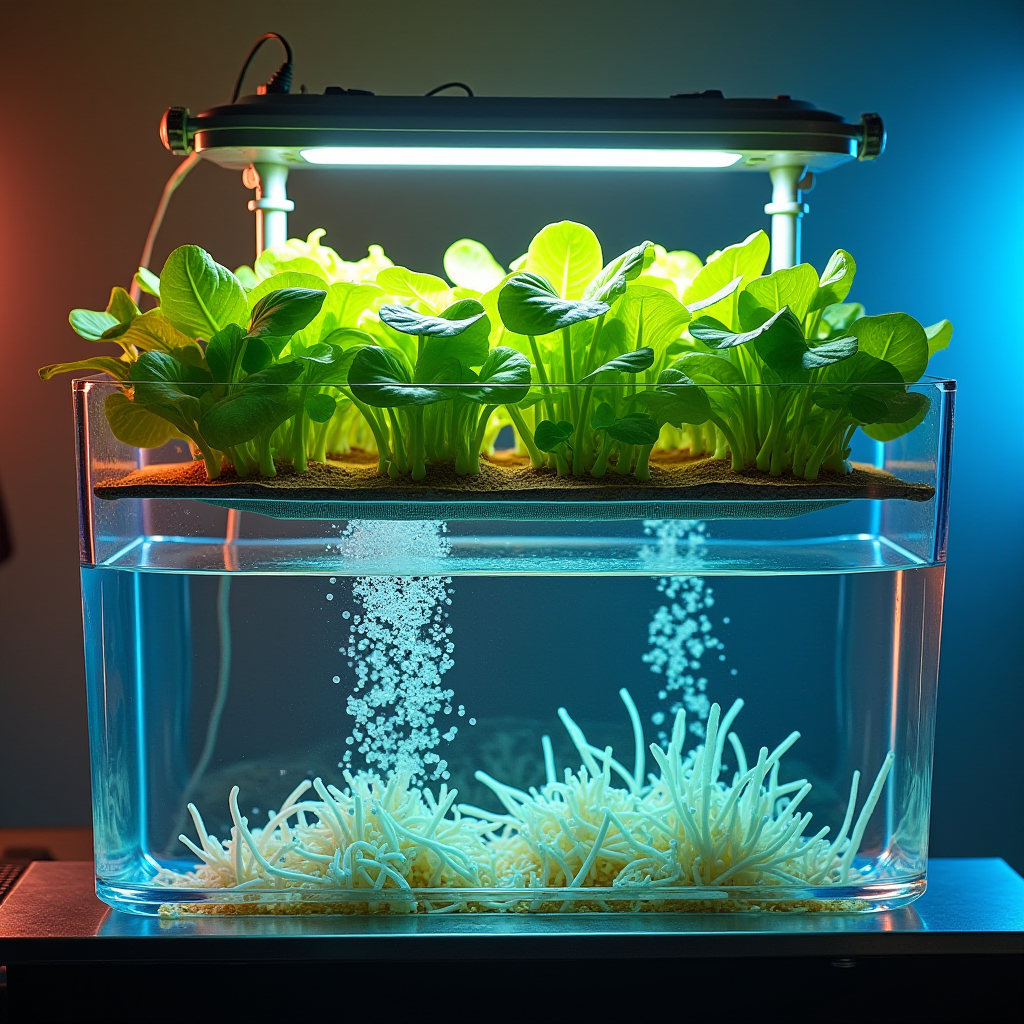
- Medium raft tanks (100‑300 L): 1 fine‑bubble diffuser per 40‑60 L, or a 50‑60 mm stone roughly every 30‑40 cm under the root mat.
- Large commercial rafts: Use diffuser lines running the length of each lane or every second lane, allowing gentle but continuous bubbling under the entire root zone rather than just at ends.
Continuous aeration is strongly advised in DWC, as emphasized in multiple DWC and water‑temp guides focused on temperature and DO.
3. Reservoir temperature: your biggest Pythium lever
Reservoir temperature is the single largest lever you have over both DO and Pythium risk. A wide range of DWC and general hydro resources converge on the same sweet‑spot: roughly 18‑22 °C (64‑72 °F) for most leafy crops in DWC water‑temperature guides.
- 18‑19 °C: High DO, slower pathogen growth, slightly slower plant metabolism.
- 20‑21 °C: Good compromise between growth speed and safety.
- 22 °C+: DO falls fast; Pythium pressure rises, especially in dense rafts.
Low‑cost cooling and insulation tactics
- Shade and decoupling: Move tanks out of direct sun, shield plumbing, and use white or reflective lids.
- Insulate tanks and pipes: EPS foam or closed‑cell insulation on the sides of raft channels and reservoirs can drop temps several degrees in hot tunnels.
- Night‑time cooling: In hot climates with cooler nights, run top‑ups and stronger recirculation at night to shed heat.
- Chillers only when justified: For commercial DWC in MENA or similar climates, a correctly sized chiller with good plumbing often costs less than chronic crop loss.

4. Recirculation and turnover: how much flow is enough?
Unlike NFT, where solution speed is a primary steering tool, DWC is about gentle but consistent movement. You are trying to keep EC, pH, and DO even across the tank while avoiding root damage.
Target tank turnover for DWC and raft systems
- Commercial raft / RDWC systems: Aim for about 0.5‑1.0x of total system volume per hour.
- Small hobby DWC (single buckets): You may run only air stones, but where you have a linked reservoir and buckets, aim for similar 0.5‑1x/hr turnover through the loop.
So a 500 L raft system would use a pump delivering 250‑500 L/h through the main circuit, plus dedicated aeration. There is no advantage to blasting roots with 3‑4x turnover like fish systems unless you have very specific heat‑exchange or filtration needs.
Plumbing details that matter
- Use multiple gentle inlets, not one jet. Split your return line so water re‑enters the tank in several lower‑velocity points instead of one fire hose.
- Give roots room. In RDWC buckets, keep main inlets and outlets below the densest root mass or shielded by screens.
- Match pipe size to pump. Undersized plumbing increases velocity and shear; oversize slightly for calmer flow.
- Blend recirculation and aeration. Use recirculation to move bulk water, and air stones to handle oxygenation and mixing right under the roots.
These ratios mirror what high‑performance DWC and RDWC systems use to achieve high DO without excessive turbulence, as practical guides and dissolved oxygen discussions from commercial system builders highlight in their DO recommendations.
5. Calcium strategy to stop tipburn in DWC
Tipburn is not just a Ca ppm problem. It is a transport and climate problem that DWC can either fix or amplify.
Solution‑side settings
- pH: Hold 5.8‑6.1 for lettuce and basil. This keeps Ca and other cations available without pushing manganese and iron toxicity.
- Ca levels: 150‑200 ppm Ca from sources like calcium nitrate is a reliable range for most leafy greens, consistent with hydroponic nutrition references for lettuce tipburn management.
- Balance N and K: Avoid over‑doing ammonium and potassium; both compete with calcium uptake and are frequently implicated in tipburn‑heavy recipes.
Climate‑side steering
- Airflow over canopies: Gentle, uniform air movement promotes transpiration and pulls Ca into fast‑growing inner leaves.
- Humidity: In warm regions, do not let RH sit pinned at 90 percent. If you cannot dehumidify, lower EC slightly and keep DO high to reduce stress and improve Ca movement.
- Finishing strategy: In the last 5‑7 days, back EC down a notch (for example from 1.5 to about 1.3 mS/cm) if you see any pale margins or minor burn forming. Combine this with strong air movement.
Remember, calcium moves with water flow in the plant. Stable DO and pH in the root zone plus consistent climate above are what make your Ca ppm useful.

What To Watch Long‑Term: Benchmarks For Stable DWC
Once you have EC, DO, and recirculation roughly on target, the game becomes consistency. Commercial RAS operators, covered frequently on sites like The Fish Site, monitor the same variables daily because water is the entire environment. DWC growers should think the same way.
Daily checks
- EC and pH: Quick meter check and log. EC should drift slowly, not jump. pH should stay within about 5.7‑6.2.
- Water level: Top up with plain water; adjust nutrients only when EC drops below your target band.
- DO spot‑checks: If you have a meter, sample near inlets, outlets, and corners. Differences tell you where to adjust aeration or flow.
- Root color and smell: White to cream and neutral smell is what you want. Any browning or musty/fermented odor means DO, temperature, or contamination issues building.
Weekly checks
- Full nutrient change: 7‑14 day interval depending on system size, stocking density, and temperature.
- Pump and diffuser maintenance: Clean filters and manifolds; check for kinks and blocked stones.
- Visual canopy scan: Walk each raft lane or bucket row and look for patterns: tipburn near inlets or outlets, slower growth on one side, or any persistent chlorosis.
Seasonal or climate‑driven adjustments
- Hot season: Run EC at the lower end of the recommended ranges, invest extra in shading and insulation, and consider nighttime‑biased irrigation and aeration boosts.
- Cool season: You can push EC slightly higher if growth slows due to light, but keep temperature and DO in range first.
- Scaling up: As you add more rafts or buckets, do not assume your old pump is enough. Use system volume and turnover targets, not guesswork, to size new pumps and diffusers.
When you treat EC, DO, and recirculation as steering tools instead of “background settings,” tipburn and Pythium stop being random disasters and become rare, predictable events that you can manage. Whether you are running a balcony DWC tub or a raft system feeding a local market, the numbers in this guide give you a concrete baseline to debug from instead of starting from zero every time heat and humidity spike.
As an Amazon Associate, I earn from qualifying purchases.