Designing 20+ Meter Vertical Farms: Safe Access, Fire Code, Pump Sizing, and Climate Uniformity (2026 Guide)
Introduction
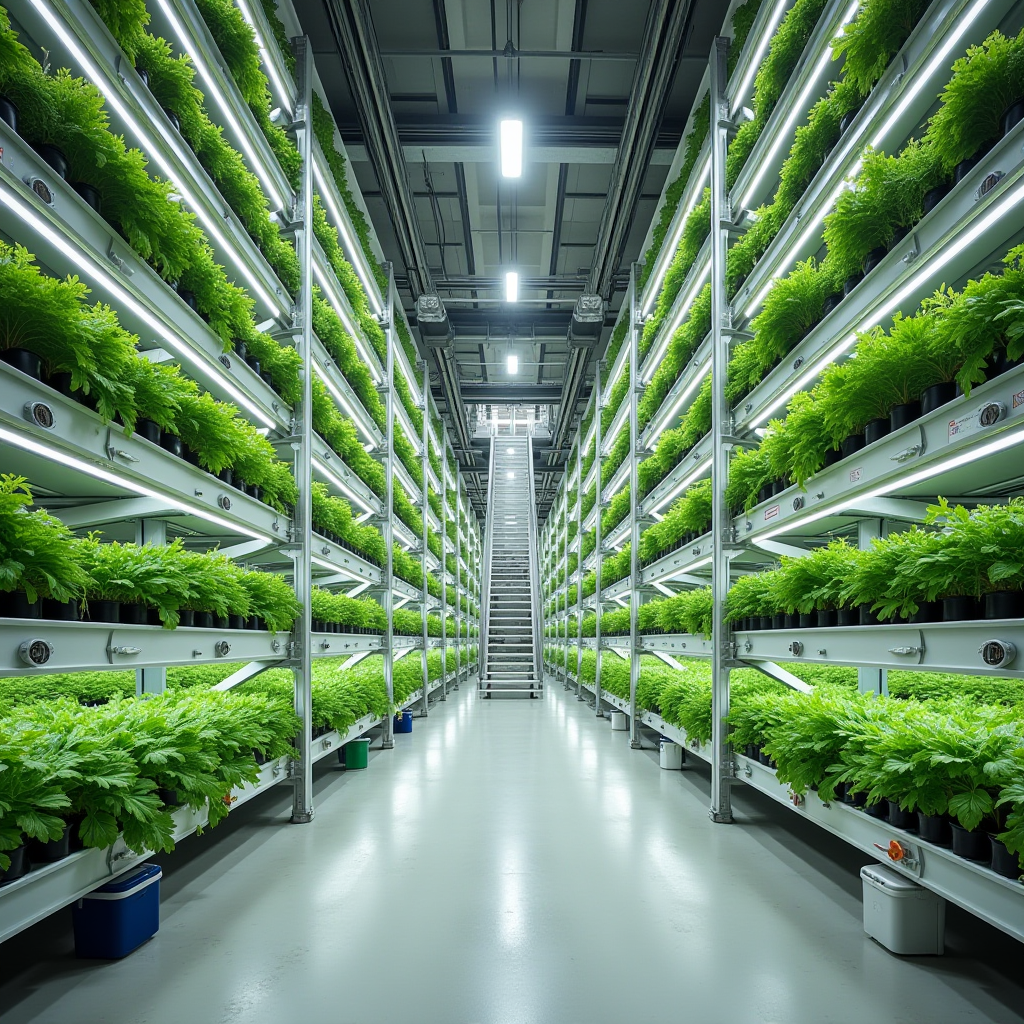
Most people see the headline “world’s tallest indoor vertical farm opens in Singapore” and think about yield per square meter. At 20+ meters tall and roughly warehouse-scale, the real battle is not yield - it is physics, safety, and code compliance. Once you stretch a farm to 6, 10, or 23 meters of rack height, everything you took for granted at 2–3 tiers starts to break: pump curves, drainage behavior, sprinkler coverage, airflow, dehumidification, and even how your staff clip a plant without falling off a lift.
The new Singapore project, reported as an $80 million “world’s tallest indoor vertical farm” opened in early 2026, is a clear signal that tall, dense vertical farms are moving from concept to mainstream infrastructure. This coverage and related reporting from Singapore highlight just how industrial these builds now are. Another article lists the project among major national developments, putting it firmly in the “serious building” category, not a container farm in a parking lot.
If you are planning anything over roughly 6–8 meters of rack height, this guide is about keeping that ambition safe, code-compliant, and stable. We will walk through the biggest mistakes growers and designers make in tall farms - and how to fix them with practical, calculation-backed design moves.
1. Common Mistakes: Treating a 23 m Farm Like a 3-Tier Rack
1.1 Ignoring fire code until after layout is “final”
In a low-bay room, you can often get away with designing racks and irrigation first, then asking a fire engineer to “fit sprinklers around it.” At 20+ m, that thinking fails fast. Fire authorities will treat your racks like high-piled storage with heavy obstruction. That typically triggers:
- Mandatory full sprinkler coverage, often including in-rack sprinklers where overhead heads are shadowed.
- Limits on total rack height and solid shelves that block water and smoke movement.
- Stricter rules on travel distance to exits, protected stair cores, and clear aisle widths.
Designing racks to the ceiling without early coordination with the Authority Having Jurisdiction (AHJ) is one of the fastest ways to get your permit rejected or your racks cut back on site.
1.2 Underestimating pump head and overestimating uniformity
In a 2–3 tier room, you might be dealing with 1–2 m of static lift. On a 23 m farm, the top manifold can see 2.3 bar of static head before you have even factored in friction or emitter pressure. Designers often repeat a “safe” pump size from smaller farms and discover that:
- Top tiers barely get enough pressure to run drippers or spray heads.
- Bottom tiers are over-pressurized unless throttled with improvised valves.
- Flow splits unevenly between risers and racks.
This is not just a comfort issue: poor distribution in tall columns translates directly into EC and pH drift between levels, nutrient imbalances, and yield gaps that look like “mystery” plant issues.
1.3 Treating working at height as a “PPE problem”
Many tall farms start as a drawing of a beautiful 8–12 tier rack with no realistic way to service it. The default response is to toss in some ladders and harnesses. That is backwards.
- Climbing wet, nutrient-slick ladders with tools is a high-risk activity.
- Harness systems without anchor points, rescue plans, or training are theater, not protection.
- Emergency egress from a lift or catwalk is often an afterthought.
At 20+ m height, your “access design” is as important as your NFT manifold layout.
1.4 Letting stratification destroy climate uniformity
Tall, sealed rooms naturally create vertical gradients: hot, humid air accumulates near the ceiling; cool air sits low. Without aggressive mixing and distributed supply/return, you see:
- Upper tiers running several degrees warmer and 5–15% RH higher than lower tiers.
- Condensation on cold surfaces near the top, including ductwork and outer walls.
- PPFD and transpiration mismatches, because VPD is different on each tier.
In hydroponics, that shows up as uneven uptake: top tiers may run higher EC in the root zone simply because transpiration is throttled by humidity, while lower tiers look “fine.”
1.5 Forgetting that drains behave differently at height
Everyone focuses on supply head. Drains get ignored until you start seeing:
- Vacuum lock and gurgling on downpipes.
- Slow drainage in upper trays and NFT channels.
- Occasional backflow or flooding when a main return is partially blocked.
At 20+ m, a vertical return line is a column of water with real energy behind it. Without vacuum breaks, proper venting, and correctly sized downpipes, you create hydraulic surprises you do not want.

2. Why These Problems Happen In Tall Farms
2.1 Fire and egress: your racks look like high-piled storage
Fire code frameworks such as NFPA 13 treat tall rack structures with combustible loads (plastic trays, packaging, grow media, cable insulation) as high-piled storage. Indoors, that means:
- Overhead sprinklers alone often cannot penetrate dense racks and lighting.
- Solid shelving blocks water and smoke, forcing in-rack sprinklers or reduced rack height.
- Catwalks and mezzanines must meet structural and guardrail standards like any industrial platform.
Singapore’s regulatory environment is strict about high-rise safety, and it is extremely unlikely that the new “world’s tallest indoor vertical farm” was permitted without full sprinkler coverage, compartmentation, and protected egress cores. The Straits Times coverage positions the farm alongside major infrastructure projects, which means mature fire engineering, not ad hoc fixes.
2.2 Pump sizing: static head dominates and friction multiplies
The physics are simple but unforgiving:
- Total Dynamic Head (TDH) = static lift + friction losses + minor losses + emitter pressure requirement.
- Static lift grows linearly with rack height; friction grows non-linearly with flow and pipe diameter.
At 23 m, your static lift is already ~23 m of head. Add 3–10 m of friction and 10–20 m of emitter pressure equivalent, and you are easily in 35–50 m total head for the top tier. A pump that was perfect for a 3 m system will work the bottom tiers and starve the top.
2.3 Drains and returns: tall water columns create vacuum and surge
Many vertical farms route NFT or DWC returns into a common downpipe. At high rise:
- Long, unvented vertical drops can siphon trays dry or cause uneven flow.
- Partial blockages create pressure zones that push water back into upper trays.
- Emergency dump valves can send a heavy surge into undersized drain headers.
Without air admittance or vacuum-break points, you are effectively running unplanned siphons between tiers.
2.4 Air and moisture stratification: heat and humidity rise
LEDs, pumps, and fans live close to the plants, and most of that heat is released into the grow volume. In a tall room with poor mixing:
- Warm air rises and accumulates above the top tier.
- Transpired moisture follows, driving RH higher with height.
- Dehumidifiers and cooling coils often “see” only the air drawn past them at mid-height.
In a high-ambient climate like Singapore, where outdoor air is warm and humid most of the year, the HVAC and dehumidification system will already be close to its limits. Climate reports show record wet and warm months, which underlines why sealed, mechanically conditioned farms lean so hard on chilled water, reheat, and aggressive air mixing.
2.5 Lighting and CO₂: recipes break when VPD is uneven
Lighting and CO₂ strategies are usually built around a target VPD and canopy temperature. With stratification:
- Top tier canopies may run higher leaf temperature and lower VPD, slowing transpiration.
- The same PPFD and EC recipe then produces different ion uptake profiles by tier.
- CO₂ enrichment can pool in low or poorly mixed zones, wasting gas and risking worker exposure if not controlled.
The end result: you think you have one recipe per crop, but the plants are living in several different microclimates stacked vertically.

3. How To Fix It: Practical Design Moves For Tall Farms
3.1 Build fire and egress into rack design, not around it
If you take one thing from this section, make it this: do a fire code pre-consult before you finalize racks or HVAC.
Step-by-step:
- Classify the occupancy with your fire engineer: agricultural processing, high-piled storage, laboratory, etc. This drives sprinkler density and egress rules.
- Draw racks on top of sprinkler layouts early. Identify shaded zones under trays, ductwork, and light bars where spray patterns will be obstructed.
- Use perforated or mesh decking where possible so water and smoke can move vertically.
- Reserve egress aisles of code-compliant width and avoid deep dead-ends between racks.
- Plan protected stair cores and catwalks that meet guardrail, load, and surface (non-slip) requirements.
- Separate process water and fire water where possible: two sets of tanks and pumps, with fire protection prioritized.
On a tall farm, sprinklers are not just “sprinklers.” They dictate rack geometry, aisle widths, and the clearance between top tier plants and the ceiling.
3.2 Design irrigation for tall head and tight distribution
Whether you are running NFT channels, high-density drip on coco slabs, or aeroponic gutters, design your irrigation as a high-head, zoned system.
3.2.1 Calculate TDH properly
For each main pump, calculate:
- Static head from tank waterline to highest outlet (top manifold).
- Friction loss in risers and mains using manufacturer tables or software at your design flow.
- Minor losses for elbows, filters, valves, manifolds (often approximated as a percentage of friction head).
- Emitter pressure (dripper or nozzle requirement) at the top tier.
Add 20–25% margin for fouling and future expansion, then select a pump that delivers the required flow at that TDH, not at “zero head.”
3.2.2 Zone vertically and horizontally
- Break the farm into pressure zones, each covering a band of tiers (for example, every 3–4 m of height).
- Use pressure-reducing valves (PRVs) or separate VFD-controlled pumps per zone to avoid over-pressurizing lower levels.
- Implement looped (ring main) distribution to even out pressure across long racks; avoid dead-end manifolds where the last plants starve.
- Install gauges and isolation valves at each major branch for commissioning and troubleshooting.
3.2.3 Engineer returns and drains
- Use adequately sized downpipes with air admittance or vacuum break points so water can fall freely without siphoning.
- Where multiple tiers feed a common stack, consider staged manifolds instead of plugging everything into one pipe.
- For DWC, locate emergency dump valves and ensure the main header can handle full-bore dumping without backing up into upper troughs.
The goal is boring hydraulics: no surprises, stable pressures, and predictable drain behavior no matter which zones are irrigating.
3.3 Make working at height a design problem, not a PPE problem
Start by asking a blunt question: “What must a human do at the top tier?” Then reduce that list aggressively with automation and ground-level operations.
3.3.1 Eliminate unnecessary height work
- Use rolling or shuttle trays that slide to ground-level workstations for seeding, transplant, pruning, and harvest.
- Centralize nutrient mixing, pH/EC monitoring, and filtration at low level in a dedicated plant room.
- Employ automated lifts or robotic systems for repetitive tasks like lettuce harvesting where ROI justifies it.
3.3.2 Engineer safe access where it remains
- Provide fixed stairs and catwalks for frequently accessed levels, built to industrial platform standards.
- Use MEWPs or scissor lifts in aisles with enough clearance and rated floor loads.
- Design anchor points and fall-arrest systems as part of the rack or building structure, not as an afterthought.
- Specify non-slip surfaces and integrated drains wherever nutrient solution may spill.
3.3.3 Integrate procedures and training
- Write task-specific safe work procedures for any activity above ground level.
- Train staff on harness use, inspection, and rescue plans.
- Run regular drills involving CO₂ alarms, fire alarms, and lift failures so workers know how to get down and out.

3.4 Defeat stratification with engineered airflow and dehumidification
For tall indoor farms, climate design has to be three-dimensional. The target is not just “22 °C and 60% RH” somewhere in the room, but that same window at each canopy level.
3.4.1 Air distribution strategies
- Ducted supply to each tier: Use fabric ducts along aisles or above racks, with perforations sized and spaced to deliver consistent airflow at each level.
- Low-level or distributed returns: Pull air off multiple heights so the HVAC plant sees a realistic average, not just mid-height conditions.
- Vertical mixing fans: Add slow, high-efficiency fans to break up stratified layers and mix treated air down through the racks.
- Tier-level circulation fans: Maintain 0.2–0.7 m/s airspeed across canopies to keep boundary layers thin and transpiration steady.
3.4.2 Dehumidification and latent load
- Estimate transpiration: at high PPFD, leafy greens can easily push several liters/m²/day of water into the air.
- Select dehumidifiers or HVAC coils that can handle the full latent load plus margin, assuming near-constant operation in humid climates.
- Use reheat or DOAS to remove moisture without overcooling the space.
- Place RH and temperature sensors at multiple tiers and build your control logic around averages and differentials (top vs bottom).
3.4.3 Coordinate lighting, CO₂, and climate
- Design lighting per tier, not per room: dedicated fixtures per rack level with dimmable drivers so you can tune PPFD by tier.
- Use CO₂ distribution that follows the airflow pattern - often injection into supply ducts feeding each tier.
- Monitor leaf temperature and VPD at multiple heights and adjust setpoints or airspeed if you see tier-specific drift.
3.5 Maintain EC, pH, and nutrient uniformity from bottom to top
For NFT, DWC, or aeroponics in tall farms, you cannot assume the same EC and pH are reaching every plant just because the main tank looks good.
Design principles:
- Use centralized stock solutions and proportional dosing, but consider local mixing manifolds on upper levels if recirculation loops are long.
- Ensure high turnover rates in each zone so solution in upper NFT channels or DWC tubs is refreshed faster than plants can significantly skew EC or pH.
- Place inline EC and pH sensors on both supply and return lines for representative zones; do not rely on a single probe in the main tank.
- Set tight control bands (small pH and EC deadbands) in tall column systems so small deviations are corrected before they add up across tiers.
3.6 Think of lighting uniformity in 3D
At multi-level scale, lighting is not just about hitting 250–350 µmol/m²/s on lettuce. It is about hitting it consistently on every tray, at every height.
Practical steps:
- Use separate LED rows per tier instead of trying to light multiple tiers from a central or high-mounted fixture.
- Standardize light-to-canopy distance per crop using adjustable fixtures or mobile benches.
- Run lighting simulations (DIALux, Relux, or manufacturer tools) to confirm vertical and horizontal uniformity before you buy hardware.
- Measure with a PAR meter on a per-tier grid and document offsets so you can adjust dimming profiles per level.

4. What To Watch Long-Term In 20+ m Vertical Farms
4.1 Safety and code: treat the farm like a high-rise industrial building
As projects like Singapore’s tall farm normalize, expect regulators to tighten expectations rather than relax them. Long-term, you will need to show:
- Documented inspections of sprinklers, detection, and suppression systems.
- Regular evacuation drills and lift/catwalk inspections.
- Up-to-date CO₂ monitoring and emergency purge tests where enrichment is used.
4.2 Mechanical systems: pumps, valves, and HVAC wear
- Track pump run hours, starts, and TDH. As filters foul or pipework ages, you will see head creep up - catch it before top tiers suffer.
- Maintain PRVs and control valves; a stuck or drifting valve can unbalance entire columns.
- Trend chiller and dehumidifier performance against room setpoints and energy use; tall rooms amplify small control errors.
4.3 Climate and nutrient uniformity: trust data, not assumptions
- Log temperature, RH, VPD, and PPFD at multiple tiers and adjust recipes if you see persistent differences.
- Sample nutrient solution from upper and lower return lines periodically to verify the recipe is not drifting by tier.
- Use yield and quality mapping (tier-by-tier) to spot slow, systemic shifts in your system long before customers do.
4.4 Human factors: ergonomics and fatigue at height
- Monitor near-misses and minor incidents on lifts and catwalks; treat them as design feedback, not “worker mistakes.”
- Adapt shift patterns and task rotations to reduce fatigue on physically demanding height work.
- Continuously check that SOPs match reality; where operators improvise, redesign the system so they do not have to.
Closing thoughts
Once you build past about 6–8 meters of rack height, you are no longer only a grower. You are operating a miniature high-rise, with all the complexity that implies. The Singapore 23 m-class farm shows what is now being built at full commercial scale. If you want to join that league, focus early on the unglamorous parts: fire code, safe access, pump sizing, drainage, airflow, and EC/pH/PPFD uniformity across the entire column.
Get those right, and your crop recipes will actually behave the way you expect from bottom tray to top tier.
As an Amazon Associate, I earn from qualifying purchases.