Most cucumber problems that growers blame on "bad genetics" are actually root‑zone steering problems.
Curved fruit, random bitterness, and hollow hearts are not random at all. In hydroponic cucumbers they track very closely with EC, Ca:K balance, drain percent, and how you pulse irrigation through the day.
Tomato and strawberry steering gets most of the attention right now, especially in conversations like this Garden Culture piece on root‑zone irrigation tools. But cucumbers are more sensitive to water status and calcium transport than either of those crops. That is exactly why they reward tight steering with clean, straight, non‑bitter, hollow‑heart‑free fruit.
This is your cucumber‑specific playbook: EC phases, pulse volumes, substrate water content, drain%, and how to adapt the strategy across rockwool, coco, perlite blends, and even simpler DWC/Kratky setups.
1. The Scenario: Great Vines, Ugly Fruit
Picture this run:
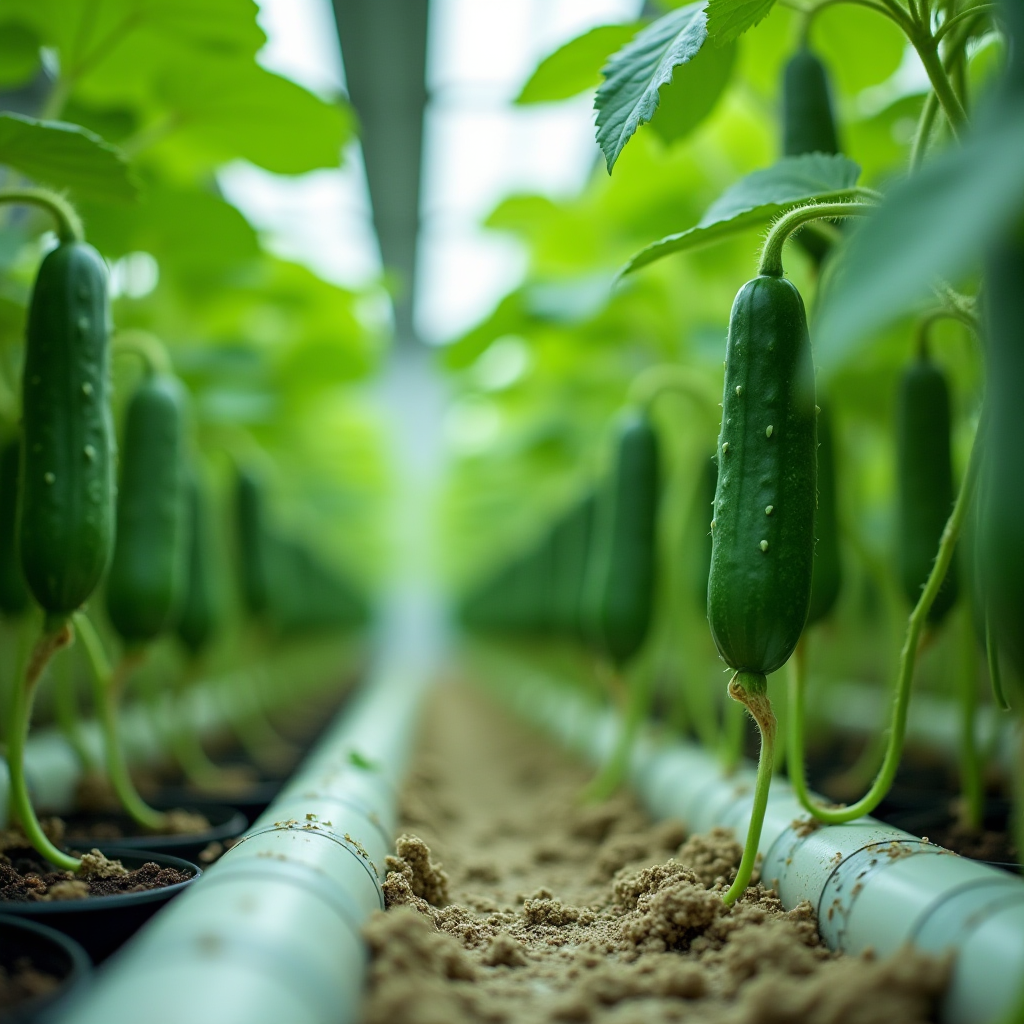
- Parthenocarpic cucumbers on rockwool slabs, 2‑3 fruits per node, solid vegetative growth.
- Feed EC at 2.4‑2.6 mS/cm, pH 5.8‑6.0, greenhouse RH 70‑80% most days.
- Day irrigation starting late morning, long pulses, very low drain until midday.
On paper it looks fine. In reality you start seeing:
- Banana‑shaped curvature on the heavier set fruits.
- Occasional bitter tips, especially after hot, bright days.
- Hollow heart on otherwise marketable fruit.
When you slice those cucumbers open, the defects line up with specific root‑zone mistakes: inconsistent EC at the root surface, sluggish calcium flow, substrate that stays too wet overnight then dries hard around midday, and irrigation pulses that follow the clock instead of the plant.
Before we break this down, you need a couple of steering concepts in cucumber language:
- Generative vs vegetative steering: shifting water and EC to favor fruit load (generative) or leaf/root growth (vegetative).
- Drain%: volume drained divided by volume applied, per day. Key to salt balance and steering.
- Substrate WC (water content): percentage of pore volume filled with water; a direct handle on root oxygen and osmotic pressure.

2. The Breakdown: What’s Actually Going Wrong In The Root Zone
EC steering in cucumbers: tighter than tomatoes
Various hydroponic charts put cucumbers around 1.8‑2.2 mS/cm in vegetative growth and 2.2‑2.8 mS/cm in heavy fruiting, with pH 5.8‑6.2 for best uptake (compiled EC/pH lists for hydroponic vegetables) and across multiple EC guides such as this reference table.
Cucumbers are particularly sensitive to:
- High EC under high light: increases osmotic pressure, reduces xylem flow, and starves young fruit of calcium.
- Fast EC swings: from dry‑down or from chasing pH with concentrated stock solutions.
Result: curvature and internal defects even while leaves look fine.
Ca:K balance and VPD: your hollow heart trigger
Most hollow heart and bitterness shows up when you combine:
- Warm, humid greenhouse (low VPD, poor transpiration).
- Potassium‑heavy feeds to push yield.
- Wet substrate overnight and into the morning.
In that scenario, calcium has no reason to move: leaves are not pulling water hard, and K is outcompeting Ca at uptake sites. Fruit tissue then forms with weak cell walls and poor fill, which you cut as hollow hearts or spongy cores. Similar relationships between VPD, Ca transport and physiological fruit issues are discussed for other crops in Garden Culture’s steering overview; cucumbers respond the same way but faster.
Drain% and pulse timing: the invisible salinity ramp
If you run long pulses with little drain until midday, your substrate EC will climb well above dripper EC. You might be feeding 2.4 mS/cm, but root‑zone EC can quietly hit 3.0‑3.5 mS/cm by late morning, then crash back late afternoon. That “EC rollercoaster” is a classic setup for bitter, curved cucumbers.
The core problems:
- Too little morning drain: salts accumulate during the most sensitive part of the day for Ca transport.
- Large pulse volumes: push nutrients past the root zone, then leave a long dry‑down.
- No link to radiation or plant demand: same schedule on cloudy and sunny days.
Substrate specifics: rockwool vs coco vs perlite
- Rockwool: low buffering, EC and WC move quickly. Great for steering, brutal if you get lazy with monitoring.
- Coco: high cation exchange; will hold K and Na, can strip Ca and Mg if not pre‑buffered and fed correctly.
- Perlite blends: drain fast, easy to dry down too hard between pulses, especially in light containers or bags.
Same plant, three very different root‑zone dynamics. You cannot run identical pulses and expect identical fruit.

3. The Action Plan: Cucumber‑Specific EC & Irrigation Steering
Phase‑by‑phase EC targets for hydroponic cucumbers
Use these as working ranges; refine per cultivar and climate.
- Nursery / propagation (up to 2 true leaves): 1.2‑1.6 mS/cm, pH 5.8‑6.0.
- Early vegetative (establishing on final substrate): 1.6‑2.0 mS/cm. Keep growth balanced, avoid over‑vigorous, floppy plants.
- Pre‑fruit set (first flowers to first fruit swell): 1.8‑2.2 mS/cm. Slightly generative but still safe on roots.
- Heavy fruiting (main harvest window): 2.2‑2.6 mS/cm for most parthenocarpic greenhouse types; rarely any benefit going higher.
- Late crop / high heat: stay at the low end of your range (2.0‑2.3 mS/cm) to reduce stress, particularly if VPD dips from high humidity.
These align well with cucumber entries in EC/pH charts such as this hydroponic chart summary and broader vegetable ranges in this pH/EC guide.
Rockwool: water content and drain% targets
For rockwool slabs under parthenocarpic cucumbers:
- Night WC: 70‑80% (measured with slab sensors or weight). Do not go into lights‑on below ~65% unless you know what you are doing.
- Midday WC: 55‑65% in active steering. Avoid dropping below 50% for more than 1‑2 hours or you will see stress.
- Daily drain%: 20‑30% most of the run. In high EC feed or very bright, hot periods, push closer to 30% to flush salts.
Operationally:
- Start irrigation 0.5‑1.0 hour after effective light begins (sunrise or LEDs at full power), not at lights‑on in a dark, cool slab.
- Use small, frequent pulses (think 1‑3% of slab volume per irrigation) targeting an early, gentle rise in WC and drain by late morning.
Coco and perlite blends: adapt the schedule
For coco:
- Use buffered coco and feed extra Ca/Mg early to load the exchange sites.
- Run slightly lower feed EC (e.g. 0.1‑0.2 lower than rockwool) since coco holds onto cations.
- Target similar drain% (20‑30%) but accept slower EC movement; corrections take longer.
For perlite (or perlite/vermiculite mixes):
- Expect rapid dry‑down. Shorten pulse intervals rather than increasing pulse size.
- Protect against midday wilting with tighter mid‑day pulse spacing.
- Monitor container weight; don’t rely on surface feel.
Typical greenhouse pulse schedule for cucumbers
As a starting point for rockwool or coco slabs under moderate sun:
- Early day (0.5‑3 hours after light on): 4‑6 pulses, small volume. Aim to reach first drain by late in this window.
- Midday (peak radiation): pulses every 10‑20 minutes, with enough volume to keep WC stable and maintain 20‑30% daily drain. This is where you protect Ca flow and fruit fill.
- Late day (last 2 hours of light): start stretching intervals and reducing volume to allow a gentle dry‑down.
- Night: no irrigation unless you have extreme heat or very dry substrate; night irrigation drives vegetative, soft growth and higher disease risk.
If you are using light or radiation‑based control like in the sensor strategies discussed in this Garden Culture article, tie pulses to light sum (J/cm²) instead of a fixed clock to match plant demand.
Parthenocarpic cultivars: how they change the steering
Parthenocarpic cucumbers do not need pollination, which is ideal for sealed greenhouses and indoor hydro. It also changes the steering slightly:
- The plant will try to set more fruit than it can finish if water and K are abundant.
- Overloaded vines under low VPD are prime candidates for hollow heart and curvature.
Your response:
- Be stricter on fruit thinning and pruning. Do not rely on the plant to self‑regulate.
- Maintain moderate EC (not “high EC for generative”). You want stable Ca supply, not stress.
- Watch drain EC on high‑load vines; if drain climbs more than 0.4‑0.5 mS/cm above feed, increase drain% and/or lower feed EC.
4. Benchmarks & Metrics: Keeping Fruit Straight, Non‑Bitter, And Solid
Root‑zone benchmarks to log daily
For serious cucumber steering, track at least:
- Feed EC/pH and first drain EC/pH.
- Midday drain EC/pH.
- Daily drain%.
- Substrate WC at start of day, midday, and end of day (or container weight as a proxy).
- Greenhouse VPD range, especially during early fruit swell.
Targets that keep you out of trouble:
- Drain EC within 0.2‑0.4 mS/cm of feed for most of the day.
- pH drift less than ±0.3 through the day; if pH climbs hard, check for root issues or nutrient imbalance.
- Daily drain% 20‑30%; if below 15% for several days, expect creeping salinity.
Ca:K and nutrient mix for cucumber quality
You do not need a strange recipe, but you do need a stable one. Use a balanced hydroponic base formulated for fruiting crops and confirm that:
- Calcium is at least 150‑180 ppm in the working solution during heavy fruiting.
- K is not pushed so high that Ca drops too low relative to plant demand.
- Mg is sufficient (40‑60 ppm range is typical) to support chlorophyll and avoid interveinal chlorosis.
As with general vegetable nutrient guides such as this pH/EC management overview, focus on consistency more than chasing small ppm tweaks.
VPD / humidity targets for clean fruit
For greenhouse cucumbers, good Ca transport and transpiration usually sit around:
- Day VPD: 0.8‑1.2 kPa for most of the crop, not stuck at 0.4‑0.5 in a fog.
- Night VPD: avoid extremes; too low invites disease, too high dries the plant out.
Symptoms to watch:
- Low VPD + soft, shiny leaves + hollow heart and tip burn on young fruit: your air is too wet for the EC you are running.
- High VPD + drooping leaves by midday + bitter, tapered fruit: check for under‑irrigation or root restriction.
How this translates to DWC and Kratky cucumbers
You cannot “pulse” a reservoir, but you can still steer with EC, solution depth, and oxygen:
- DWC:
- Keep EC on the lower side of the ranges above (e.g. 1.8‑2.2 early, 2.0‑2.4 fruiting) to avoid osmotic stress in constantly soaked roots.
- Maintain dissolved oxygen above 6 mg/L with strong aeration.
- Top up with plain water between nutrient changes to limit EC creep.
- Kratky / semi‑Kratky:
- Set initial EC slightly lower than you would in a fully recirculating system, because EC rises as water is used.
- Leave a generous air gap as roots mature; if the lower root zone is constantly submerged and warm, you get root stress instead of steering.
- Refresh solution completely once EC climbs more than ~0.5 above target or pH drifts out of range for more than a day.
In both cases, bitterness and hollow heart still track with uneven EC, low Ca, and environmental stress. You control that with disciplined EC/pH monitoring and enough aeration.
How to know your steering is working
Within 1‑2 weeks of tightening your EC and irrigation steering, you should see:
- More uniform fruit shape, fewer banana curves.
- Cleaner internal texture, fewer voids or spongy cores.
- More consistent fruit size along the vine.
- Less random bitterness, especially after hot, bright days.
If yield dips sharply after you lower EC or increase drain%, you probably went too far into vegetative steering (too wet at night, too low EC) or reduced nutrient strength more than the plant could tolerate under your light level. Adjust one variable at a time and track the effect.

Dial your root‑zone steering to where fruit defects almost vanish while yield holds or improves. Once that baseline is stable, then experiment around the edges. But do not try to “fix genetics” or “fix nutrients” until you have proven that EC, irrigation pulses, drain%, and VPD are under control. Cucumbers will tell you very quickly when you get those four right.
As an Amazon Associate, I earn from qualifying purchases.