Hydroponic Greenhouse Workforce Training (2026): A 90‑Day SOP Onboarding Playbook That Protects Yields and Compliance
"You can train anyone to harvest." That belief is quietly wrecking yields, spiking audit risk, and burning out your senior growers.
In a modern hydroponic greenhouse or vertical farm, the real risk is not that new staff make mistakes. It is that they make the right-looking moves with zero process control behind them: copying what they saw once, guessing EC corrections, skipping half the IPM route because "plants look fine".
As controlled environment agriculture scales in universities and commercial sites, more students and new workers are entering greenhouses with partial skills and uneven habits. Programs highlighted by the University of Georgia are already putting students into hands-on hydroponic facilities and greenhouses, building the next generation of CEA talent, but the skill level is still inconsistent farm to farm, and there is no shared onboarding standard new hires can carry between sites, which leaves managers rebuilding training from scratch every season (source).
At the same time, automation is exploding. Global agriculture robot revenues are projected to grow from $12.2 billion in 2025 to $139.4 billion by 2035, driven by labor constraints and the need for precision tasks in production environments (source). Robots can run dosing, irrigation pulses, and climate routines, but if the workforce cannot interpret sensor data, execute SOPs, and log corrective actions, the tech does not protect your crop or your audit trail.
Urban hydroponics is also ramping up in India and other emerging markets. Coverage of urban farming in Bhagalpur, Bihar shows growers using hydroponics for high value crops in dense city environments, but with limited technical labor and a steep learning curve for new workers coming in from non-ag backgrounds (source). In that setting you cannot afford a three-month "watch and copy" apprenticeship that trashes a basil or lettuce cycle.
What you need is a 90-day, SOP-backed onboarding playbook that makes new staff safe, useful, and consistent across shifts without sacrificing yields, food safety, or compliance. That is what this article gives you, in a simple, repeatable structure you can adapt to a Kratky herb room, a DWC lettuce line, an NFT greenhouse bay, or a mixed vertical farm.
1. The Scenario: 90 Days To Turn Rookies Into Reliable Hydro Techs
Picture a typical 2026 operation:
- 2 to 4 bays of hydroponic greenhouse production: DWC rafts for lettuce, NFT channels for herbs, maybe a vertical rack with small fruiting crops.
- Environmental controls and alarms in place, but manual checks still run every shift.
- A mixed team: 1 or 2 experienced growers, 4 to 10 new hires with zero hydroponic background, plus part-time students or seasonal staff.
- Robotics coming in fast: auto dosing, conveyor handling, maybe a seeding line, but still dependent on human calibration and QA.
The mandate from owners is blunt:
- Get new hires productive in 30 days.
- Hit full task competency by 90 days without killing a crop.
- Stay audit-ready for food safety, worker safety, and traceability at all times.
Here is the problem: most farms have good SOPs, but they live in binders or shared drives. New staff receive a quick tour, watch a few tasks, then get thrown into harvest or transplant. There is no structured ramp for pH/EC control, IPM scouting, sanitation, or basic automation checks.
This 90-day playbook fixes that by organizing onboarding into four concrete blocks:
- Day 0-7: Safety, sanitation, and simple, low-risk tasks.
- Day 8-30: Basic system operation, readings, and repeatable checklists.
- Day 31-60: Independent execution of core hydro tasks with supervision.
- Day 61-90: Full shift coverage, IPM responsibilities, and audit support.
We will tie every phase to specific SOPs, competencies, and KPIs so you can look at any worker and know: "Can they run this bay alone without risking a recall or a lost crop?"

2. The Breakdown: Roles, SOP Map, And Competency Ladder
2.1 Define clear roles before you write training
In a hydroponic greenhouse or vertical farm, "worker" is not precise enough. Before you structure onboarding, define 3 to 4 standard roles and what tasks they own by Day 90.
- Hydro Tech 1 (Entry)
- Seed, transplant, and harvest following SOPs.
- Run sanitation checklists for tools, benches, NFT channels, DWC rafts, and floors.
- Capture pH/EC readings and climate data, but does not adjust.
- Hydro Tech 2 (Core Operator)
- Mix nutrient solutions and adjust pH/EC within limits.
- Execute irrigation pulse schedules or DWC/NFT change routines.
- Perform IPM scouting routes and flag issues.
- Run basic troubleshooting on pumps, injectors, and alarms.
- IPM & QA Lead (Advanced)
- Own the IPM calendar, thresholds, and response actions.
- Verify sanitation, harvest QA, and traceability records.
- Lead corrective actions when KPIs drift.
Your 90-day onboarding focuses on pushing new hires from "unassigned" to Hydro Tech 1 by Day 30 and into Hydro Tech 2 territory by Day 90, with documented skills.
2.2 Map SOPs to training modules
Next, tag every key SOP to a training module. If an SOP does not attach to at least one module, either it is obsolete or your onboarding is incomplete.
- Nutrient & pH/EC SOPs
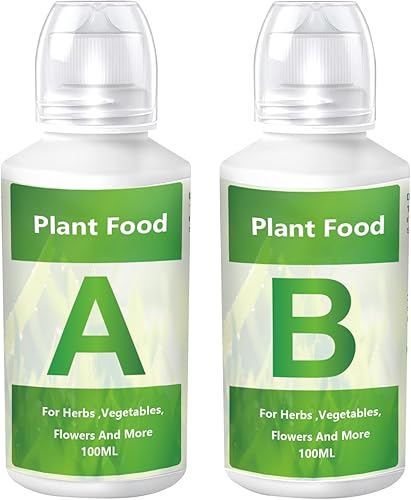
- NUT-01: Prepare stock solutions A/B.
- NUT-02: Calibrate EC and pH meters.
- NUT-03: Adjust reservoir EC to target range (crop-specific).
- NUT-04: Adjust pH to crop range (e.g., 5.5-6.0 for leafy greens).
- Irrigation & System SOPs
- SYS-01: Start-of-shift NFT inspection.
- SYS-02: DWC daily oxygen and temperature checks.
- SYS-03: Irrigation pulse schedule verification for substrate crops.
- SYS-04: Power outage and pump-failure response.
- IPM SOPs
- IPM-01: Sticky card placement and rotation.
- IPM-02: Scouting route and leaf sampling pattern.
- IPM-03: Thresholds and treatment options by pest.
- IPM-04: Record-keeping and follow-up checks.
- Sanitation & Biosecurity SOPs
- SAN-01: Handwash, PPE, and entry protocol.
- SAN-02: Tool, bench, and channel disinfection.
- SAN-03: End-of-crop line cleaning (NFT/DWC disassembly routine).
- SAN-04: Visitor and contractor movement rules (high level only).
- Lighting & Climate SOPs
- ENV-01: Daily climate log and alarm check.
- ENV-02: Light schedule verification and manual override rules.
- ENV-03: Local microclimate checks in vertical racks.
- Harvest & QA SOPs
- HAR-01: Pre-harvest hygiene and tool prep.
- HAR-02: Harvest technique by crop and system.
- HAR-03: Pack-out QA checks (weight, defects, labeling).
- HAR-04: Traceability record completion.
Training modules will pull directly from these SOPs, not from memory. Whenever possible, align your approach with good agricultural practice guidelines for hydroponics, which emphasize documented procedures, sanitation, and clear responsibilities (example GAP guide).
2.3 Build a simple competency ladder
Now define what "trained" means for each module. A practical ladder looks like this:
- Level 0: Observe only - Watches task done correctly. No hands on.
- Level 1: Assist - Performs steps under direct supervision, trainer controls decisions and sign-off.
- Level 2: Execute - Performs entire SOP unsupervised, but cannot change parameters.
- Level 3: Adjust - Executes SOP and makes allowed adjustments (e.g., pH/EC corrections within a set range) and documents deviations.
By Day 90, your target should be:
- All Hydro Tech 1 tasks at Level 2+.
- Key Hydro Tech 2 tasks (pH/EC, IPM scouting, irrigation checks) at Level 2, moving to 3.

3. The Action Plan: A 90-Day Hydroponic Onboarding Framework
3.1 Days 0-7: Safety, sanitation, and orientation
This first week is about protecting the crop, staff, and audit trail. New hires do not adjust nutrients or climate. They learn the environment and run low-risk but high-value routines.
Core objectives
- Understand farm layout and flow: clean/dirty zones, crop stages, and system types (Kratky, DWC, NFT, substrate drip).
- Master entry hygiene, PPE, and biosecurity.
- Learn standard terminology: EC, pH, stock tank, return line, pulse, IPM, biofilm.
- Start simple logging habits.
Modules and SOPs (Level targets)
- Orientation & Safety
- Review safety data sheets (SDS) for nutrient acids/alkalis.
- Walkthrough emergency exits, spill kits, first aid, and electrical shutoffs.
- Target: Level 2 by Day 7 (can explain and follow without prompting).
- Entry & Biosecurity (SAN-01)
- Handwash, PPE order, footbaths, phone/tool rules.
- Target: Level 2 by Day 3 (correct 100% of the time).
- Basic Sanitation (SAN-02)
- Tool and bench disinfection, wiping NFT lids, simple DWC raft cleaning.
- Target: Level 1-2 by Day 7.
- System Tour & Concepts
- Identify each system: Kratky beds or jars, DWC rafts, NFT channels, any substrate drip.
- Explain basic flow: source water, dosing, distribution, return.
- Target: Level 1 (can walk and describe system correctly).
- Observation-only pH/EC & Climate (NUT-02, ENV-01)
- Shadow daily checks: see how pH and EC are measured and logged.
- Listen for acceptable ranges by crop and system.
- Target: Level 0-1 (no adjustments).
Week 1 checklists
- Daily: correct PPE, handwash, and entry sign-in.
- At least 1 full system tour per day.
- Observe a complete pH/EC check on all active reservoirs.
- Participate in one end-of-day cleaning routine.
Week 1 KPIs
- 0 sanitation deviations (no skipped handwash/PPE after Day 3).
- 100% completion of assigned cleaning tasks on checklists.
- Basic vocabulary quiz score of 80%+ (short, 10 terms).
3.2 Days 8-30: Basic hydro operation without decision authority
Weeks 2-4 turn new staff into reliable Hydro Tech 1 operators. They still do not decide targets, but they now execute SOPs start to finish.
Core objectives
- Execute daily and weekly checklists for systems at Level 2.
- Capture accurate readings for pH, EC, and climate.
- Run simple, standardized tasks: seeding, transplant, harvest, and sanitation.
Modules and SOPs
- pH & EC Measurement (NUT-02)
- Calibrate meters according to manufacturer instructions and farm SOPs.
- Measure and log pH/EC for each reservoir and system.
- Target: Level 2 by Day 30 (no independent adjustments yet).
- System Checks (SYS-01, SYS-02, SYS-03)
- NFT: Check flows, return clarity, no leaks or dry spots.
- DWC: Check water level, temperature, and aeration.
- Kratky: Verify solution level vs. root zone, top-up routine.
- Substrate: Confirm irrigation pulse timing/as-run against the schedule.
- Target: Level 2 across assigned bay.
- Seeding & Transplant SOPs
- Correct media prep (sponges, rockwool, or plugs).
- Seed density, depth, and labeling for traceability.
- Transplant criteria: root length, seedling age, and spacing.
- Target: Level 2 with random QA checks.
- Basic IPM Awareness (IPM-01, IPM-02)
- Identify common pests and disorders: thrips, aphids, fungus gnats, powdery mildew, and tip burn.
- Learn the scouting route: pattern, plant sampling, and sticky card checks.
- Target: Level 1-2 (can complete route, senior reviews findings).
- Harvest & QA Basics (HAR-01, HAR-02)
- Correct cut, handling, and crate loading by crop.
- Observe QA checks for weight and quality.
- Target: Level 2 (run harvest safely and efficiently).
Weeks 2-4 checklists
- Daily system walk for assigned bays with documented findings.
- Daily pH/EC measurements for each active reservoir, countersigned by a trainer.
- At least 2 full harvests and 2 transplant cycles completed.
- At least 2 IPM scouting routes completed with notes.
Weeks 2-4 KPIs
- Zero missed readings on daily logs for assigned bays.
- <2% labeling errors on new batches.
- 90%+ accuracy on a simple pest ID sheet (visuals).
3.3 Days 31-60: Supervised decision-making on nutrients, IPM, and irrigation
This is where most farms either accelerate capability or lose crops. New staff are now allowed to act on deviations in pH, EC, and basic IPM triggers, but with tight guardrails.
Core objectives
- Adjust pH/EC safely within specified bands.
- Recognize early IPM issues and start the response chain.
- Run bay-level tasks without constant supervision.
Modules and SOPs
- Nutrient Mixing & Dosing Safety (NUT-01, NUT-03, NUT-04)
- Mix stock solutions A/B with correct PPE and measuring techniques.
- Use dosing charts or software to bring EC into range.
- Use acid/alkali safely to adjust pH in small increments.
- Understand target ranges by crop stage and system, aligned with best practices on nutrient management and pH control (example training).
- Target: Level 2-3 (can act under general rules, supervisor reviews adjustments).
- Irrigation & Environment Adjustments (SYS-03, ENV-02)
- Adjust irrigation pulses inside pre-approved bands.
- Recognize signs of over- and under-watering in substrate or Kratky systems.
- Verify and correct light schedules and simple setpoints when alarms trigger.
- Target: Level 2 (execute changes, not redesign strategy).
- IPM Scouting & First Response (IPM-02, IPM-03)
- Run full scouting with consistent timing and route.
- Log pest presence, life stage, and intensity using standard forms.
- Trigger the correct next step when thresholds are crossed (e.g., release beneficials, isolate affected area as per IPM program).
- Target: Level 2-3 under an IPM lead.
- Traceability and Batch Records (HAR-03, HAR-04)
- Complete batch logs that link seed lot, sow date, system, treatment events, and harvest lot ID.
- Understand how these records support audits and recalls.
- Target: Level 2 (independent completion, periodic QA review).
Weeks 5-8 checklists
- At least 5 supervised nutrient adjustments documented with rationale.
- At least 4 independent pH/EC check and adjust cycles per week.
- Weekly IPM report submitted, signed by an IPM lead.
- All harvest batches from assigned bay fully traceable, spot-checked.
Weeks 5-8 KPIs
- pH within target range for 90%+ of readings post-adjustment.
- EC within crop range 95%+ of the time, avoiding rapid swings.
- IPM issues escalated within one shift of first detection.
- Traceability completeness > 98% on random record audits.
3.4 Days 61-90: Reliable shift coverage and audit readiness
By now, your new hires should function as dependable Hydro Tech 2 operators in at least one area of the farm. They can cover a shift for their assigned bay or line.
Core objectives
- Run end-to-end bay operations on a shift, including start-up and shutdown.
- Maintain environmental and nutrient stability within defined limits.
- Support audits with clean records and clear explanations.
Modules and SOPs
- Full Bay Ownership
- Start-of-day checks: systems, nutrients, climate alarms.
- End-of-day: logs complete, corrective actions documented, sanitation done.
- Respond to simple alarms without escalation.
- Target: Level 3 for core tasks within that bay.
- Advanced IPM Responsibilities (under supervision)
- Lead one weekly IPM walkthrough and present findings.
- Apply non-chemical controls according to IPM-03 (e.g., pruning, removing heavily infested plants, deploying beneficials where SOP allows).
- Target: Level 3 on detection and documentation; Level 2 on actions.
- Audit Simulation
- Practice walking an auditor through records for one crop line.
- Explain nutrient and IPM decisions using logs and SOPs.
- Target: Level 2 (can answer basic questions with documents).
Weeks 9-12 checklists
- At least 4 full shifts where the trainee owns one bay end-to-end.
- One mock audit involving that bay's records and logs.
- One documented IPM event handled according to SOP.
Weeks 9-12 KPIs
- No unlogged corrective actions during owned shifts.
- Zero critical deviations in nutrient or climate that reach crop damage.
- Audit simulation score of 90%+ on an internal checklist.
4. Benchmarks & Metrics: Turning Training Into A Repeatable System
A 90-day plan is only useful if you can measure it. Here is how to quantify performance without drowning in dashboards.
4.1 Core KPIs for hydroponic onboarding
Track these per trainee and per bay.
- Nutrient Management
- Percentage of pH readings in target range after adjustment.
- Percentage of EC readings in target range for that crop/system.
- Number of nutrient-related corrective actions per month (aim to decrease over time).
- IPM Performance
- Time from first pest sign to documented response.
- Number of IPM scouting sessions missed or incomplete.
- Crop loss percentage due to pests per cycle.
- Sanitation & Biosecurity
- Number of sanitation checklist deviations per month.
- Presence of algae or biofilm in NFT channels, DWC reservoirs, or Kratky containers on random checks.
- Traceability & Records
- Percentage of batches with complete records.
- Number of unlogged interventions discovered during audits.
4.2 Competency matrix template
Build a simple grid with trainees on one axis and modules on the other. For each module (e.g., pH/EC, IPM scouting, harvest QA), assign a level (0-3) and review monthly.
- Goal by Day 30
- All safety, sanitation, entry, and harvest modules at Level 2.
- pH/EC measurement at Level 2.
- Goal by Day 60
- Nutrient adjustment and irrigation checks at Level 2.
- IPM scouting at Level 2.
- Traceability and batch logs at Level 2.
- Goal by Day 90
- Full bay operation at Level 3 for at least one area.
- Audit simulation at Level 2.
4.3 Integrating automation and robotics into training
With agriculture robots and CEA automation expanding rapidly, your workforce training must include basic interaction with these systems, not just manual work. Tie this into your SOPs rather than treating robotics as a separate specialty.
- Dosing and fertigation robots
- Teach staff how to read and confirm the robot's EC and pH setpoints.
- Train them on what to do when there is a clear mismatch between plant response and sensor readings.
- Add a module for manual override procedures and documentation when automation is offline.
- Automated conveyors or harvest lines
- Include start/stop safety procedures in orientation.
- Teach basic jam-clearing SOPs and when to escalate.
- Integrate QC sampling steps so that "faster" does not mean "sloppier" crop quality.
As automation investments grow, the farms that win are those where human operators understand how to keep that equipment in spec and how to protect the crop when it fails.

Putting It All Together
Hydroponic greenhouse worker training in 2026 cannot be a loose mix of shadowing and verbal tips. The stakes are too high: high-density urban farms in India and elsewhere are pushing more yield through every square meter, while automation and audit pressure keep climbing.
Your best defense is a simple, aggressive 90-day onboarding program that:
- Maps every critical hydro task to a written SOP.
- Pushes new hires through clear competency levels with measurable KPIs.
- Gives them safe, supervised experience with pH/EC control, nutrient dosing, irrigation, IPM, sanitation, and traceability.
- Integrates automation, not as magic, but as one more system they know how to verify and back up.
If you build and actually use a playbook like this, you will see the difference within one or two crop cycles: fewer "mystery" yield drops, cleaner audits, and a workforce that can grow with your tech instead of fighting it.
As an Amazon Associate, I earn from qualifying purchases.