Hydroponics in Saudi Arabia (2026): Cooling 45°C Heat, Desalinated Water Remineralization, and a Permit & Market Checklist
The Saudi twist: not just “desert growing”
“Hydroponics works anywhere in the desert as long as you add enough AC and nutrients.” In Saudi Arabia, that belief will burn cash faster than your chillers burn kilowatts.
KSA is not a generic hot, dry climate. You are dealing with:
- Summer dry-bulb temperatures above 45°C with punishing wet-bulb values that limit how far evaporative cooling can go.
- Desalinated water that is extremely low in minerals and alkalinity, which makes pH unstable and Ca/Mg availability tricky.
- A fast-evolving Vision 2030 policy environment where incentives, permits, and standards can make or break your project timeline and OPEX, as highlighted in recent coverage on Saudi agrifood investment.
This post is a practical, Saudi-specific playbook for 2026: how to cool greenhouses in 45°C heat, how to remineralize desalinated water so your pH behaves, what crops and varieties make sense, and a grounded checklist of permits, approvals, and incentives to check before you spend serious money.
1. Common mistakes Saudi hydroponic projects keep repeating
Mistake 1: Treating cooling as “just add more AC”
Too many investors assume that if you budget enough electricity for split units or chillers, you can ignore psychrometrics. In practice, oversizing mechanical cooling without a strategy for wet-bulb limits, air distribution, and humidity control leads to:
- Huge peak demand charges during July–August afternoons.
- Hot spots in greenhouse bays and vertical racks.
- Condensation, foliar disease, and unstable VPD around the canopy.
Evaporative methods (pad-and-fan, fogging) are often bolted on later as “add-ons” rather than designed into the building from day one. That wastes both capex and yield potential.
Mistake 2: Using desalinated water straight into nutrient tanks
Desalinated water in KSA is typically very low in hardness and alkalinity. On paper, this looks perfect for hydroponics. In practice, farms that skip remineralization run into:
- Runaway pH drift because there is almost no buffering capacity.
- Calcium and magnesium deficiencies when they try to run “soft water” recipes without enough base hardness.
- Wild swings in nutrient availability whenever acid or base is added.
Several Saudi-focused guides now call out desalination, remineralization, and precise water management as critical success factors for controlled-environment agriculture in the Kingdom, not optional upgrades.
Mistake 3: Importing generic crop lists instead of Saudi-specific genetics
Plenty of KSA pitch decks still show the same generic list: lettuce, basil, strawberries, cherry tomatoes. The problem is not the crops. The problem is the varieties and logistics.
- Standard European lettuce cultivars tip-burn easily above 26–28°C, even in DWC.
- Some basil lines get hammered by high night temperatures plus elevated humidity under pad-and-fan cooling.
- Strawberries look great on slides, but cold-chain requirements and high cooling loads make them a marginal choice for many inland sites.
Mistake 4: Assuming permits and food safety certificates can “wait until later”
Hydroponics and vertical farms are now seen as strategic assets under Vision 2030 and emerging urban food strategies, similar to the smart greenhouse concepts discussed in this discussion of smart greenhouses and city food systems. That’s good for support and incentives, but it also means more scrutiny.
Many projects still start construction before:
- Confirming land-use classification allows hydroponics or vertical farming.
- Aligning with food safety standards that buyers and regulators will actually require in 2026.
- Checking eligibility windows and documentation for grants, soft loans, or energy subsidies.
The result: completed facilities that cannot legally operate at full capacity or cannot sell into the higher-value retail and hospitality channels they were banking on.

2. Why these mistakes keep happening in Saudi projects
Cooling: misunderstanding wet-bulb limits and load profiles
In Jeddah, Riyadh, or the Eastern Province, summer dry-bulb temperatures can exceed 45°C. The theoretical cooling potential of pad-and-fan or fogging systems is capped by wet-bulb temperature and humidity. Many international consultants use rules of thumb from more temperate climates.
That leads to cooling designs that:
- Overestimate the delta between outside dry-bulb and achievable inside temperature.
- Ignore that high night temperatures keep root zones warm, stressing crops like lettuce and some herbs.
- Do not fully account for latent loads from fogging and plant transpiration in tightly sealed vertical farms.
Smart greenhouse discussions increasingly highlight combining passive strategies, evaporative cooling, and targeted mechanical systems to stabilize climate rather than relying solely on chillers for every degree of control.
Water: desalination fixes salinity but removes your buffer
Desalination solves salinity and microbial issues, but it strips out hardness and alkalinity. For hydroponics, alkalinity in the range of 40–80 ppm as CaCO₃ is often a good starting point to avoid wild pH swings. Saudi desalinated supplies can be near zero.
Without base hardness:
- Acid additions overshoot quickly.
- Plants see fluctuating availability of Ca, Mg, and some micronutrients.
- Automated dosing systems chase pH and EC all day, wasting nutrient solution.
Local hydroponic solution providers in KSA now explicitly design water pre-treatment and remineralization into their projects, not as afterthoughts, in order to hit the yield numbers that market analyses are projecting for 2030.
Crops: climate, logistics, and market reality
The national hydroponics market is forecast to grow strongly through 2030, driven by food security concerns and growing demand for fresh produce in urban centers. That does not mean every crop fits every site.
- Inland sites with higher summer night temperatures struggle to keep dense-head lettuce below stress thresholds without heavy cooling spend.
- Coastal sites face higher humidity, which affects disease pressure in vining crops like tomatoes and cucumbers.
- Premium markets (airports, hotels, high-end retail) reward consistency and food safety credentials more than exotic crop lists.
Ignoring these constraints is how you end up with beautiful demo farms that cannot scale profitably.
Regulation: hydroponics is now strategic infrastructure
As Vision 2030 and related strategies push for water savings, reduced imports, and urban food production, hydroponics is gaining attention from regulators and city planners. Smart greenhouse concepts position these facilities as part of core urban infrastructure, not just private greenhouses on cheap land.
The upside is access to incentives, technical support, and fast-track procedures. The downside is higher expectations around:
- Water use efficiency and discharge standards.
- Food safety, traceability, and worker safety.
- Alignment with city planning, zoning, and sometimes aesthetic guidelines for visible structures.
3. How to fix it: cooling, water, crops, and compliance for 2026
Cooling for 45°C heat: pad-and-fan, fogging, desiccant, and shade
In KSA, you are not choosing “AC or not.” You are designing a hybrid climate system that respects wet-bulb limits, humidity, and running costs.
Step 1: Design around your worst week, not the average month
Pick your worst-case week in July or August for the specific site. Use hourly weather files if you can. For that week, map:
- Outside dry-bulb and humidity.
- Target inside temperature and humidity by crop (for lettuce vs basil vs tomato).
- Solar gains, internal loads from pumps and lights (especially in vertical farms), and plant transpiration.
Now look at what pad-and-fan alone can realistically achieve versus wet-bulb. In some inland locations, pad-and-fan may only get you to 28–30°C on the hottest afternoons. Decide whether that is acceptable for your crop mix or whether you need supplemental cooling.
Step 2: Choose your primary cooling strategy
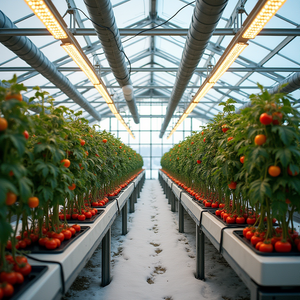
- Pad-and-fan as the backbone
Best for: low to mid-rise greenhouses, large floor areas, crops that tolerate mid-20s temperatures.
Advantages: relatively low energy, robust technology, straightforward maintenance.
Watch points: requires good pad design and air distribution, plus drainage and water treatment to avoid scaling and biofilm. - High-pressure fogging as a booster
Best for: finetuning canopy-level cooling and VPD, especially in taller houses or highly ventilated structures.
Advantages: flexible zoning, can be targeted to hot areas, can pair with ventilation systems.
Watch points: increased humidity risk if airflow is insufficient, nozzle clogging if pre-filtration is poor. - Hybrid with mechanical cooling and/or desiccant systems
Best for: high-value crops in coastal/humid sites, or vertical farms where tight VPD control is essential.
Advantages: ability to hold conditions when evaporative systems hit their limit, better disease control via humidity management.
Watch points: higher capex and OPEX, more complex maintenance, and a need for skilled operators.
Step 3: Use shade and envelope design to reduce your load
In 2026, the cheapest cooling kWh is the one you never need. For Saudi sites, aim to cut your cooling load before you start sizing equipment:
- Use external shade screens with adjustable shading percentage.
- Specify glazing with appropriate solar heat gain coefficients for your latitude and market segment.
- Seal air leaks and design proper vestibules to prevent hot air surges when doors open.
Step 4: Match hydroponic system choice to climate control reality
Your hydroponic system type interacts with your cooling envelope:
- Deep Water Culture (DWC): excellent buffer for roots, but you must keep solution temperatures in a stable range. In 45°C climates, that often means insulation, reflective covers, and sometimes solution cooling.
- Nutrient Film Technique (NFT): faster root zone temperature swings; good for lighter crops with shorter cycles if you can keep channel temperatures under control with shading and supply water temperature management.
- Kratky: great for low-energy, smaller-scale projects; in KSA, you must pay attention to container insulation and reservoir temperatures if units are not fully indoors.
Remineralizing desalinated water: a practical starting recipe
Think of desalinated water as a clean blank slate that needs structure. Here is a practical, conservative approach many commercial farms use as a starting point (always lab-test your source first):
- Target alkalinity: 40–80 ppm as CaCO₃.
- Target base hardness (Ca + Mg together): 40–60 ppm before you add crop-specific nutrients.
A simple sequence:
- Lab test your raw water for conductivity, pH, alkalinity, and major ions.
- Set alkalinity using a blend of calcium carbonate or bicarbonate and magnesium sources. Many growers use food-grade calcium carbonate or a controlled addition of calcium bicarbonate via dosing when pH is low.
- Add base Ca/Mg either by using a dedicated Ca/Mg supplement or by adjusting your A/B stock recipes so that the final solution provides stable base hardness.
- Then mix nutrients for your crop to reach the target EC, usually 1.2–1.8 mS/cm for leafy greens and 2.0–3.0 mS/cm for heavy-feeding fruiting crops, depending on your program.
- Finally, adjust pH to 5.6–6.2 for most leafy greens and herbs and 5.8–6.5 for fruiting crops.
Monitor over a few cycles. If pH crashes too easily, increase alkalinity slightly. If pH creeps upward and is hard to control, your alkalinity is too high for your feed strength.
Crop and variety choices that fit Saudi realities
For profitable operation, line your crop list up against three constraints: climate, logistics, and demand.
1) Climate tolerance
- Leafy greens: look for heat-tolerant lettuce (often labeled “tropical” or “summer” types), plus salanova-style multi-cut varieties that allow rapid turns. Add kale, chard, and certain Asian greens that can handle slightly higher temperatures.
- Herbs: Genovese basil, mint, and coriander can work, but prioritize lines trialed in hot or tropical regions. Pay attention to bolting resistance and tolerance to high night temperatures.
- Vining crops: tomatoes, cucumbers, and peppers can do very well in KSA if you run appropriate climate control and choose varieties bred for warm climates.
2) Logistics and market access
- Proximity to major cities like Riyadh, Jeddah, and Dammam/Saudi Eastern Region gives you more channels for fresh, premium produce.
- Align harvest days with transport and buyer intake schedules to minimize time from harvest to shelf.
- Consider contracts or MOUs with hotels, restaurants, and retailers that value traceable, local, water-efficient production.
3) System fit
- DWC and NFT are excellent for lettuce and leafy greens.
- Trellised tomatoes, cucumbers, and peppers fit better in high-wire greenhouse systems with drip irrigation.
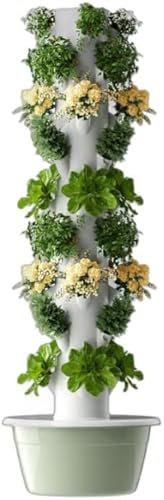
- Compact Kratky or vertical tower systems work well for herbs in hospitality or retail-facing installations close to consumers.
Indoor and vertical cooling nuances
For fully indoor or container-based farms, you are closer to classic HVAC design, but Saudi conditions still matter because outside air is hot and often dry. Focus on:
- High-efficiency envelope insulation to keep heat out.
- Variable speed HVAC and dehumidification matched to your LED lighting schedules.
- Redundant monitoring of air and solution temperature, humidity, and VPD.

4. Saudi-specific permit, food safety, and incentive checklist
This is not legal advice, and rules evolve, but if you are planning a hydroponic or vertical farm in Saudi Arabia for 2026, these are the core items to verify early.
Land, zoning, and utilities
- Land-use classification: confirm that your site is zoned for agricultural or industrial use that explicitly allows hydroponic greenhouses or indoor farms.
- Grid connection: for high-intensity cooling and lighting, confirm available power capacity and tariff structure, including peak and off-peak rates.
- Water source approval: ensure your connection to desalinated municipal supply or private desalination is permitted for agricultural use.
- Discharge permits: plan for nutrient solution disposal or treatment to meet local environmental regulations.
Core agricultural and operational permits
- Registration or licensing with the relevant national and municipal authorities for agricultural production.
- Compliance with any controlled-environment agriculture guidelines that may emerge as KSA’s hydroponic industry grows.
- Documentation of water savings and resource efficiency, which may matter for both approval and incentives.
Food safety and quality certification
To sell into modern retail, export channels, or higher-end hospitality, expect buyers to ask for robust food safety proof.
- Hazard Analysis and Critical Control Points (HACCP) plan covering seed to harvest to packing.
- Clear protocols for cleaning, sanitation, and worker hygiene.
- Monitoring records for water quality (pH, EC, microbiological tests), nutrient recipes, and climate conditions.
- Traceability from batch to customer so you can recall if necessary.
Vision 2030 and vertical farming incentives
Recent reports highlight that hydroponics, vertical farms, and smart greenhouses are now embedded in Saudi Arabia’s broader food security and diversification strategy. For 2026, look for:
- Grants or co-financing for controlled-environment agriculture infrastructure.
- Soft loans or guarantees for agritech projects that demonstrate water savings and local job creation.
- Support for R&D, pilot projects, and collaboration with universities and technology providers.
Many of these programs require strong documentation: baseline water and energy use, yield targets, and clear business plans. Hydroponics is no longer just a technology choice; it is part of a national strategy that values measurable outcomes.
Internal operations checklist for Saudi hydroponic sites
Alongside formal permits and incentives, set internal benchmarks so your team operates at the level regulators and buyers expect.
- Daily: log pH, EC, solution temperature, air temperature, humidity, VPD, and any anomalies.
- Weekly: inspect pads, fogging nozzles, filters, pumps, and drains; check for leaks and biofilm; review nutrient use versus yield.
- Monthly: lab test water and leaf tissue for key ions, review crop performance by variety, and adjust recipes or climate setpoints.
- Quarterly: audit food safety protocols, training records, and incident reports; update risk assessments as needed.

Bringing it together: choosing where to site, what to build, and what to grow
By 2026, the question in Saudi Arabia is not whether hydroponics and vertical farming will play a role in food security. That is already clear in policy, market growth projections, and media coverage. The real questions are:
- Where should you site your facility to balance land cost, access to markets, power availability, and cooling loads?
- What combination of pad-and-fan, fogging, shade, and mechanical cooling gives you a stable climate without destroying your OPEX?
- How will you remineralize desalinated water so that your nutrients behave and your pH stays in range?
- Which crops and varieties will give you reliable yields at your location, in your system, with your logistics chain?
- Which permits, food safety programs, and Vision 2030 incentives can you lock in early so that the project is bankable and scalable?
If you tackle those questions directly, and design your hydroponic system around Saudi realities instead of generic desert assumptions, you will be far ahead of the average project. You will also be better aligned with where KSA’s hydroponic industry is actually heading: data-driven, water-efficient, and tightly integrated into the country’s food system and policy framework.
As an Amazon Associate, I earn from qualifying purchases.