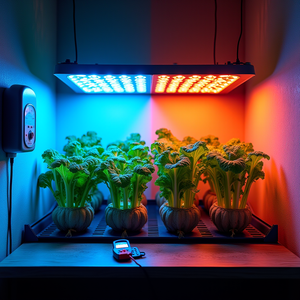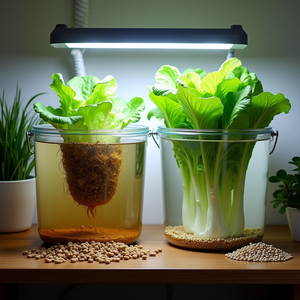
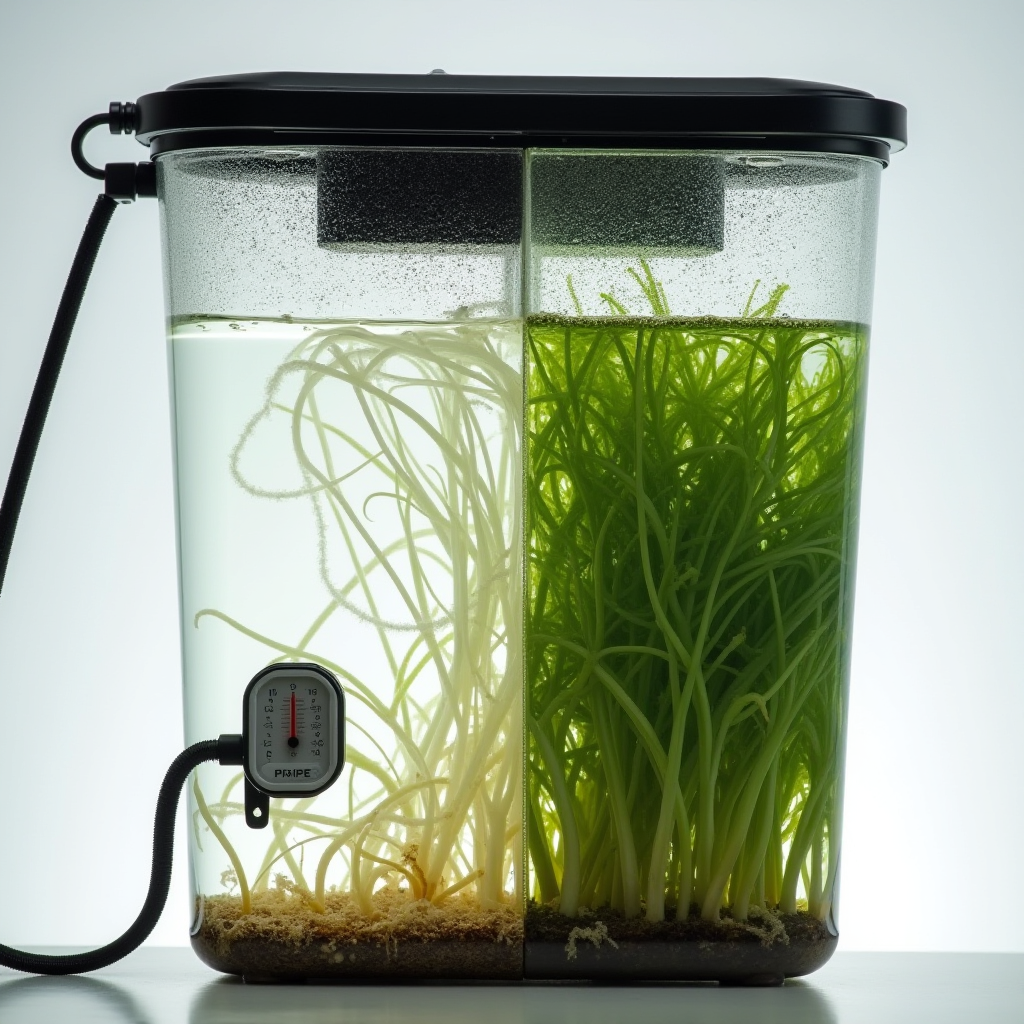
Stop DWC Root Rot: Reservoir Temperature, Dissolved Oxygen, and Algae Control for Indoor Greens
If your DWC lettuce smells like a swamp and your basil wilts from the roots up, it is not “just hydroponics being fussy” - it is your reservoir screaming for help.
With more home growers running deep water culture (DWC) buckets and raft tubs in tight indoor spaces, root rot and algae blooms are exploding. The good news: this is not random. It is physics, biology, and a bit of design - all of which you can control.
This guide stays laser-focused on four levers that decide whether your indoor greens thrive or crash:
- Reservoir temperature
- Dissolved oxygen (DO)
- Light exclusion and algae control
- pH and EC management
Dial these in and your lettuce, basil, and other leafy greens will grow fast, clean, and disease-free without constant firefighting.
The Problem: Slimy Roots, Green Soup, and Wild pH Swings
Most small indoor DWC and raft setups fail in the same predictable ways:
- Roots turn brown, slimy, and smelly instead of staying crisp and white.
- Algae coats the reservoir walls, air stones, and even roots, turning the water into green soup.
- pH swings all over the place - you adjust in the morning, it drifts by night.
- EC climbs or crashes, leading to tip burn on lettuce or pale, hungry basil.
- Plants stall just when they should be taking off, especially under warm indoor summer temperatures.
In DWC and raft systems, the entire root mass lives in that reservoir. When the reservoir gets too warm, too bright, too low in oxygen, or too concentrated with salts, problems stack up fast. Unlike media-based systems, you do not have a forgiving buffer. The water is the root zone.
So if your greens repeatedly suffer from:
- Root rot outbreaks every warm spell
- Algae blooms in clear totes or buckets
- Persistent pH drift and mystery lockouts
the reservoir design and management are almost always the root cause.

The Cause: Warm, Stagnant, Bright Reservoirs Are Root Rot Factories
Root rot in hydroponics is not mysterious. It is mostly a conditions problem. Pathogens like Pythium love three things: warm water, low oxygen, and stressed roots. If you give them that combo, they will win every time.
1. Reservoir temperature: your first line of defense
Water temperature controls both oxygen levels and pathogen pressure. Warmer water holds less dissolved oxygen and favors disease. Several hydroponic resources and extension publications recommend keeping DWC nutrient solution around 18-21°C (65-70°F) for most leafy greens and herbs, balancing plant comfort with high oxygen solubility. As noted in this guide, reservoirs creeping toward 26-27°C (79-80°F) become ideal for root rot.
In cramped indoor grows, reservoirs often sit under hot lights or next to warm walls, quietly drifting into the danger zone.
2. Dissolved oxygen: not optional in DWC
In soil, roots can access air pockets. In DWC, their only oxygen source is what you dissolve into the nutrient solution. If DO drops, roots suffocate and pathogens get a foothold.
Research and grower guides commonly target 6 ppm or higher dissolved oxygen for productive hydroponic systems, especially in constant submersion setups like DWC, as outlined in technical resources such as the Virginia Tech extension publication on DWC systems (PDF).
Undersized aquarium pumps, clogged air stones, and stagnant corners in big totes are classic ways to starve roots of oxygen.
3. Light leaks: algae’s open invitation
Algae does not care about your plants. It cares about light, water, and nutrients - and your reservoir gives it all three if light gets in.
According to practical DWC setup guides, simply keeping nutrient solution out of direct light is one of the most effective algae controls. If your bucket or raft tub is translucent, or your net pot holes leak light around the collars, you are feeding algae for free, as noted in this DWC quick setup guide.
4. pH and EC mismanagement: slow stress that invites disease
Even if your temperature and DO are perfect, wild nutrient conditions can still weaken roots.
- pH too high or low locks out key nutrients.
- EC too high burns roots and dehydrates them.
- EC too low starves the plant.
Most DWC lettuce and basil runs best around:
- pH 5.5-6.2 for strong nutrient availability, as noted in DWC nutrient management discussions such as this guide.
- EC ~0.8-1.4 mS/cm for lettuce and tender greens, slightly higher for basil depending on variety and light intensity.
When pH drifts for days or EC climbs with top-ups and no reservoir changes, root stress increases - and stressed roots are much easier for pathogens to colonize.

The Solution: Design Your Reservoir Like a Controlled Root Zone
Fixing DWC root rot and algae is less about “magic additives” and more about engineering four things:
1. Lock in the right reservoir temperature
For indoor lettuce, basil, and leafy greens, aim to keep your solution in the 18-21°C (65-70°F) window consistently.
Practical ways to get there in small DWC and raft setups:
- Keep the reservoir off hot floors and away from heaters or sun-exposed windows.
- Use opaque, light-colored totes or buckets that reflect heat instead of absorbing it.
- Increase water volume when possible. Larger reservoirs warm and cool more slowly.
- Run lights on a cooler schedule (for example, overnight) if room temperatures spike during the day.
- For hot climates, consider a small water chiller or rotating frozen water bottles in the reservoir, monitoring closely with a thermometer.
2. Oversize your aeration
Most home DWC buckets are under-aerated. If your roots are fully submerged, treat oxygen delivery as non-negotiable:
- Use an air pump rated well above “aquarium” needs. More air is almost always better in DWC.
- Run multiple air stones per tote or bucket instead of a single small one.
- Spread stones to avoid dead zones where roots hang in still water.
- Clean or replace clogged air stones regularly; biofilm and algae reduce bubble output.
If you want numbers, aim to keep DO at 6 ppm or higher. You do not need a DO meter to start, but everything you do (cooler water, stronger air, cleaner stones) should push in that direction.
3. Block light like you mean it
Every photon that hits your nutrient solution is an algae growth opportunity. The simplest algae control plan is:
- Use opaque reservoirs (black, dark green, or wrapped) instead of clear storage boxes.
- Cover unused net pot holes with blank inserts or foil tape.
- Wrap clear tubing or swap it for black tubing.
- Use lids or covers snug around net pots so almost no light hits the water surface.
In Kratky jars and small passive systems, blackout sleeves or light-blocking wraps instantly cut algae without touching nutrients or adding chemicals. The same principle applies at DWC scale: exclude light, starve algae.
4. Run pH and EC like a disciplined grower
Your reservoir is not a swamp; it is a controlled nutrient solution. Treat pH and EC as vital signs:
Daily or near-daily checks
- Use a reliable pH meter and EC/TDS meter, calibrated regularly, as recommended in technical DWC resources such as this extension publication.
- Log readings so you see trends, not just snapshots.
Target ranges for indoor greens in DWC/rafts
- pH: 5.5-6.2, let it drift gently within that band.
- EC:
- Lettuce and baby greens: ~0.8-1.2 mS/cm.
- Basil and more vigorous herbs: ~1.2-1.6 mS/cm, adjusted to light intensity and growth stage.
Top-ups and reservoir changes
- Top up with plain water (pH-adjusted) as plants drink to keep EC stable.
- Perform a full reservoir change every 1-2 weeks for small systems, or when EC and pH become hard to control, as reinforced in water management discussions like this water change guide.
5. Sanitation and inspections: the free yield booster
Clean systems are stable systems:
- Between crops, scrub reservoirs, lines, and stones with a mild disinfectant or peroxide solution, then rinse thoroughly.
- During runs, inspect roots weekly:
- Healthy: white to cream, firm, smell like fresh plants.
- In trouble: brown, slimy, or sour-smelling.
- Remove obviously dead roots so they do not decay in the solution.
If root rot does appear, immediate actions include lowering temperature, boosting aeration, sanitizing hardware, and, if needed, applying appropriate root-zone treatments or beneficial microbes as suggested in practical root rot prevention guides like this one.
The Evidence: Numbers That Keep Your Roots Alive
You do not need a lab coat to run clean DWC, but a few proven ranges will keep you out of trouble.
Reservoir temperature and dissolved oxygen
- Target solution temperature: 18-21°C (65-70°F) for lettuce and most herbs.
- Root rot risk climbs fast as temperatures approach 24-26°C (75-79°F) and above, as discussed in real-world root rot case studies like this article.
- Dissolved oxygen: 6 ppm or higher is a common benchmark for productive hydroponics, emphasized in technical documents such as the Virginia Tech DWC extension publication (PDF).
Algae control by design
- Algae thrives when nutrient solution is exposed to light; blocking light to the reservoir is a core recommendation in DWC setup guides like this one.
- Opaque reservoirs, covered net pot holes, and shaded plumbing are mechanical, low-maintenance ways to stop algae before it starts.
pH and EC ranges that work indoors
From hydroponic nutrient management discussions such as this DWC nutrient guide and related technical resources:
- pH 5.5-6.2 keeps macro and micronutrients available without causing most toxicity issues.
- EC 0.8-1.2 mS/cm supports rapid lettuce growth without tip burn under moderate light.
- EC 1.2-1.6 mS/cm suits hungrier herbs like basil if light and temperature are dialed in.
- Regular water changes (7-14 days for small systems) prevent salt buildup, pH drift, and nutrient imbalances, a best practice reinforced in water change scheduling advice like this article.
Combine those numbers with strong aeration, light exclusion, and basic hygiene, and DWC stops being a drama generator and becomes what it should be: a fast, reliable way to harvest clean greens off a balcony or spare-room shelf.
The bottom line: design your reservoir as a controlled environment, not a bucket of luck. Control temperature, maximize dissolved oxygen, block light, and manage pH/EC like a routine, and root rot plus algae will go from “constant threat” to “rare mistake.”
As an Amazon Associate, I earn from qualifying purchases.