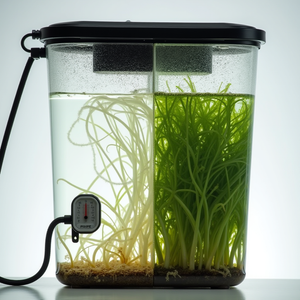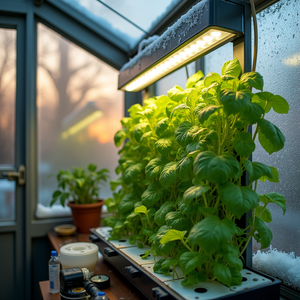
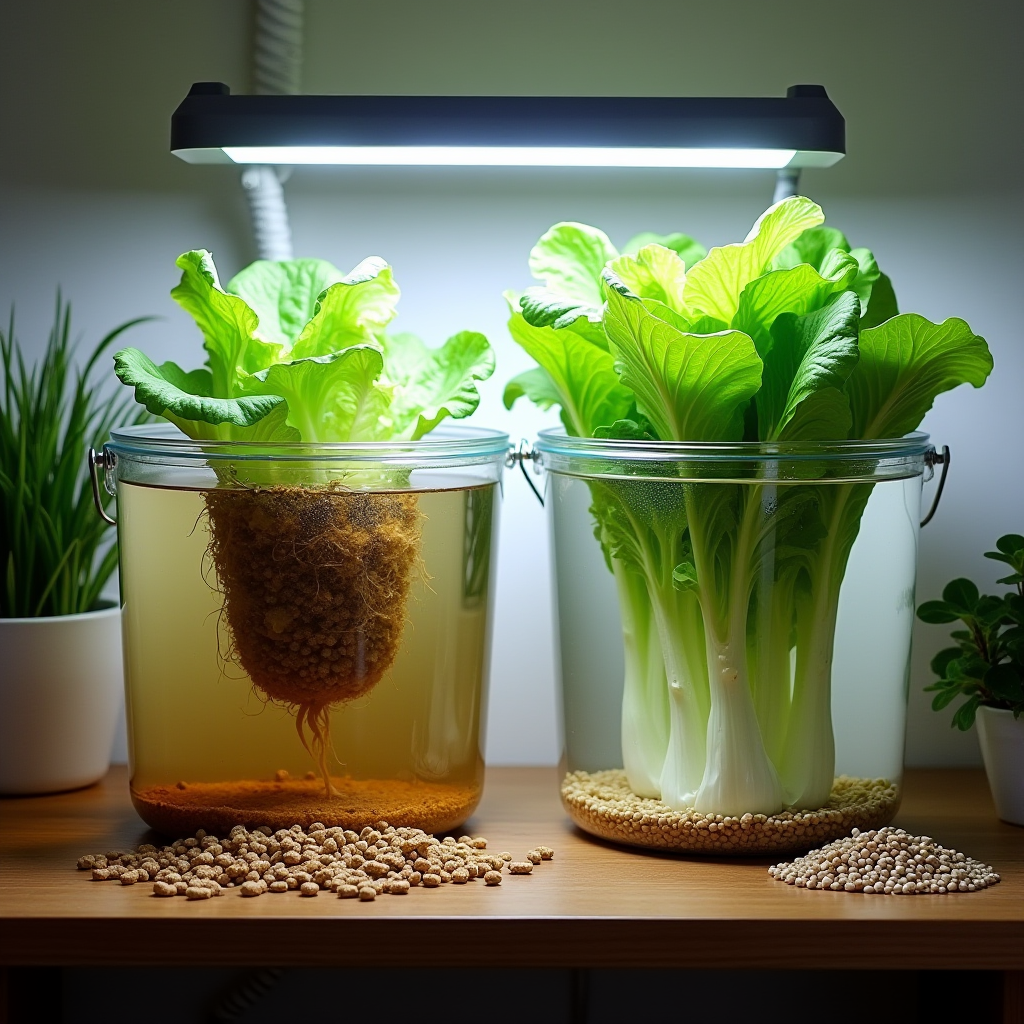
If your DWC roots look like spaghetti in pea soup, it might be the cat food
Tilapia will eat almost anything that hits the water - including cat food. That is exactly why small-scale aquaponics and DWC growers get into trouble.
On paper it sounds clever: cat food is high protein, tilapia are omnivores, so why not? In a real deep water culture (DWC) aquaponics system, though, pet feed usually means algae blooms, foamy biofilm, pH swings, low dissolved oxygen, and eventually slimy, browned roots that stop taking up nutrients.
This is not about what tilapia can survive on. It is about what keeps water clean and roots white in a raft or DWC bed.
Let’s break down why non-aquaculture feeds wreck water chemistry, how that hits your raft plants, and what to feed instead so your fish, bacteria, and roots all stay in the sweet spot.
The Problem: slimy roots, stalled growth, and "mystery" pH swings
Here is the typical story in a home or small DWC aquaponics setup:
- Tilapia are eating cat food or generic pet feed.
- Raft bed or DWC channel looks fine for a few weeks.
- Then the water turns tea-colored or green, smells earthy or slightly funky, and the surface gets a scummy film.
- Plant roots change from bright white to tan, then brown and stringy, sometimes with clear slime.
- Growth plateaus: lettuce heads stay small, basil drops leaves, fruiting crops stall or show deficiencies.
- pH starts doing a rollercoaster: suddenly crashing or creeping up, rarely staying stable for more than a few days.
In aquaponic DWC beds, those symptoms nearly always point at the same underlying problem: the biofilter and root zone are being asked to digest way more organic junk than the system was sized for.
Instead of a clear, slightly amber nutrient solution, you get a weak compost tea wrapped around your plant roots. Oxygen gets stripped out, heterotrophic bacteria explode, and the nitrifying bacteria that actually feed your plants get pushed to the back of the line.
Once dissolved oxygen in the raft water drops below roughly 5 mg/L, roots and nitrifiers both suffer. As noted in this aquaponics fish health guide, low oxygen and excess solids are a fast track to stress and disease on the fish side too.

The Cause: pet feed is designed for bowls, not biofilters
Tilapia can physically eat cat food. The question is what that feed does in water.
Most cat and dog foods are built for a mammal’s gut and a dry bowl:
- High fat and animal byproducts that smear and float when they hit water.
- Binders and starches that break down into fine particles and dissolve as organic load.
- Flavor enhancers and oils that create surface films and foaming.
In a DWC aquaponics system, that matters a lot more than it does in a fish-only tank. Here is why.
1. Huge organic load that chokes nitrifying bacteria
Commercial aquaculture pellets for tilapia are formulated to be reasonably water-stable and to minimize fines and leaching. Pet feeds are not. As they soften and break apart they feed a different cast of microbes:
- Heterotrophic bacteria explode on the extra proteins, fats, and starches.
- These bacteria consume oxygen first, long before nitrifying bacteria get their share.
- Nitrifiers, which convert toxic ammonia to nitrate for your plants, get outcompeted and slowed down.
The result is a system that looks "biologically active" - lots of foam, biofilm, and brown slime - but underperforms on the one conversion that matters for plant growth: ammonia to nitrate. Multiple guides on aquaponics feeding emphasize that overfeeding or using the wrong feed quickly degrades water quality and stresses biofilters, as explained in this fish feeding guide.
2. pH swings as the system struggles to digest all that carbon
All that extra organic carbon from pet feed has to go somewhere. As microbes respire, they produce CO2, which dissolves in water and forms carbonic acid. That nudges pH down. At the same time, nitrification itself is acidifying, while carbonate hardness in your water buffers in the other direction.
Overloaded systems swing between:
- Short-term pH drops after heavy feeding and microbial blooms.
- Gradual pH shifts as buffers are consumed.
Aquaponics systems typically run best around pH 6.8-7.0 to keep both fish and plants happy, as noted in this aquaponics fish food guide. Constant swings outside that range can cause nutrient lockout for plants and stress for fish.
3. Surface scum and foaming that cut gas exchange
Fats and oils from pet feed collect on the water surface and in your raft channels. Combined with bacterial biofilm, this creates a skin that reduces gas exchange at the air-water interface. In raft DWC beds, where a lot of oxygenation comes from bubbling plus surface diffusion, that is a problem.
The more organic-rich the water, the more your air stones have to work just to keep dissolved oxygen up. If you have marginal aeration or warm water (common with tilapia), DO can crash at night when plant and microbial respiration peak.
4. Solids and fines plugging root zones and lines
Fine particles from mushy pet feed settle in low-flow zones:
- Under raft boards and in plant sites.
- In biofilters and pump intakes.
- In any dead spots in DWC channels.
That creates little anaerobic pockets where oxygen is near zero. Those zones favor the wrong microbes and create byproducts like hydrogen sulfide and organic acids, which are directly toxic to roots and unpleasant to be around.
The Solution: proper tilapia feed, solids control, and oxygen first
The fix is not complicated, but it does require discipline. You are managing a living filter and a root zone, not just "some fish in a tub".
1. Switch to a real aquaculture or formulated tilapia feed
For DWC aquaponics, you want:
- Floating or slow-sinking pellets that stay intact long enough for fish to eat them.
- Protein 28-36% for grow-out tilapia, depending on temperature and growth stage.
- Lower crude fat than typical cat food, to reduce surface scum and biofilm.
- Minimal dust or fines in the bag.
Feed only what fish will consume in about 5 minutes, 1-3 times per day, adjusting for temperature and biomass. Resources on aquaponics feeding, like this tilapia feeding guide, consistently warn that overfeeding and poor feed choices are the fastest route to bad water quality.
2. Remove or settle solids before they hit the raft bed
In small home systems we often skip proper solids management, then wonder why the rafts sludge up. Add at least one of these between your fish tank and DWC bed:
- Swirl or radial flow settler to drop out heavier particles.
- Static upflow filter (barrel with media) to trap fines.
- A simple sock filter on the DWC return for polishing.
Clean these on a schedule, not "when they look bad". Think of it as taking out the trash so your raft does not become the bin.
3. Protect dissolved oxygen like your yield depends on it (because it does)
DWC aquaponics is only forgiving if oxygen is high and stable. Aim for:
- Continuous aeration in fish tank and raft bed.
- Plenty of air stone coverage under rafts, not just in the fish tank.
- Cooler water when possible: tilapia are fine at 24-28°C, but every degree up cuts oxygen saturation.
Root rot organisms like Pythium thrive in warm, low-oxygen water. High DO and active flow are your simplest root-rot prevention tools, especially where organic load is naturally higher, as in aquaponics compared to sterile hydroponics.
4. Keep light off the water
Even with good feed, aquaponics water contains plenty of nutrients for algae. If you also let light hit the water in your rafts or channels, algae will compete directly with your plants and chew through oxygen at night.
Simple fixes:
- Use light-tight raft boards and lids.
- Seal around net pots so there are no bright rings of exposed water.
- Paint or tape translucent plumbing to block light.
5. Respect the biofilter: give bacteria time and space
Your nitrifying bacteria prefer clean, oxygen-rich surfaces:
- Use dedicated biofilter media (static media bed, moving bed, or a well-aerated media zone) sized for your fish load.
- Avoid slamming the system with big feed increases overnight.
- When you change feeds, do it gradually over 5-7 days to avoid a sudden ammonia spike.
6. For Kratky or non-aquaponic DWC: do not use fish feed as "nutrients"
In pure hydro (Kratky buckets, small indoor DWC), sprinkling fish or pet feed in the reservoir to "make nutrients" is a shortcut to root rot. Unlike a full aquaponics setup, you do not have a dedicated biofilter or enough water volume to process that organic load.
Use a balanced hydroponic nutrient instead, keep EC in range for your crop, and treat the reservoir like a clean, food-grade tank - not a compost bin in disguise.

The Evidence: what the numbers say about water quality and roots
You do not need a lab to manage water quality, but you do need some targets. Here are practical ranges that line up with the aquaponics feeding and water quality resources cited earlier:
1. pH targets for DWC aquaponics vs sterile hydro
- Aquaponics DWC: pH 6.6-7.0 is a realistic sweet spot.
- Hydroponic DWC / Kratky: pH 5.5-6.5 is ideal for nutrient availability.
In aquaponics, you compromise slightly on plant-optimal pH so fish and nitrifying bacteria stay comfortable, as noted in this aquaponics feeding guide. Pet feed that drives heavy microbial respiration and rapid pH shifts pushes you out of this band faster.
2. Dissolved oxygen and temperature
- Keep DO above 5 mg/L everywhere fish and roots live; 6+ mg/L is better.
- Tilapia grow well between 24-30°C, but as you climb above 28°C oxygen availability drops and root pathogens get more comfortable.
This is part of why tilapia-in-a-barrel plus warm greenhouse plus high-organic pet feed is such a common recipe for root problems. Warm, low-oxygen, high-carbon water is exactly what root rot organisms like.
3. Ammonia, nitrite, and solids
- Total ammonia nitrogen ideally below 0.5 mg/L, nitrite as close to 0 as possible.
- If tests creep up, reduce feeding immediately and check your solids management.
Overfeeding or dirty feed choices show up as rising ammonia and nitrite long before plants crash. As explained in this aquaponics feeding overview, dialing feed rate to what the biofilter can handle is core to stable systems.
4. Root health as your built-in sensor
You do not always need test kits to see when feed choice is wrong. Pull a raft and look:
- Healthy roots: white to cream, firm, with a fresh, earthy smell.
- Stressed roots: off-white or tan, slightly slimy, with visible particles stuck to them.
- Failing roots: brown, smelly, sloughing off, often in systems with visible surface scum or foamy water.
If switching from cat food to a proper tilapia feed, improving aeration, and tightening up solids management does not give you whiter roots within 1-2 weeks, you likely have a deeper oxygen or pathogen issue that needs attention.
5. Why this matters for Kratky and small DWC too
Even in Kratky buckets or small indoor DWC without fish, the same physics applies:
- Any decomposing organic material in the reservoir consumes oxygen.
- Warm, stagnant, nutrient-rich, low-oxygen water is root rot territory.
- Using a clean hydroponic nutrient at appropriate EC is far safer than improvising with pet or fish feed.
For leafy greens in pure hydro DWC, aim for EC around 1.2-1.8 mS/cm, good aeration, and absolutely no "bonus" organic inputs. Let the nutrients feed the plant, not the microbes.
Bottom line: yes, tilapia can eat cat food. In a DWC aquaponics system, though, your plants and biofilter pay the price. If you want clear water, strong nitrification, and white, vigorous roots, feed like a fish farmer, not like a pet owner - and design your system so solids and oxygen are always under control.

As an Amazon Associate, I earn from qualifying purchases.